
Many car enthusiasts often hear reviewers or marketing materials praising a vehicle for its "robust aluminum alloy control arms"—a phrase that sounds synonymous with "high performance." But the reality is not that straightforward.
The previous article already compared steel versus aluminum in detail. To reiterate: while aluminum alloys enable weight reduction, they are not automatically synonymous with superior performance. Moreover, machining this "premium" material demands stricter process control and offers less tolerance for error than steel—after all, steel remains the most widely used and reliable metal humanity has mastered to date. To achieve comparable performance levels, aluminum suspension components typically incur production costs several times higher than their steel counterparts.
When viewing a new car, sales consultants often point to the undercarriage and say: "Look—our vehicle features robust aluminum alloy control arms, something only found on premium models!"
At first glance, this may seem stronger and safer than slender steel control arms. But the truth is: robust appearance does not equal greater strength.
Different Material Properties
· Steel inherently possesses high strength and stiffness, so even slender designs can withstand suspension loads.
· Aluminum alloy, while lightweight, has lower strength and stiffness than steel. To compensate, engineers must increase the cross-sectional area, resulting in a visually "bulkier" appearance.
The Illusion of Visual Impact
· Consumers often equate "thicker = stronger," so manufacturers emphasize "robust aluminum alloy control arms" for marketing appeal.
· In reality, this is merely a design compensation for material limitations—not an indication of "extra reinforcement."
If they're not inherently stronger, why do luxury vehicles still use aluminum? The answer lies in several tangible benefits:
Weight Reduction
· Aluminum's density is only one-third that of steel. Under equivalent load-bearing requirements, aluminum components are significantly lighter.
· This reduces unsprung mass, allowing the vehicle to regain stability more quickly over bumps, improving ride comfort and enhancing steering responsiveness.
Superior Corrosion Resistance
· In northern regions where roads are salted in winter, steel control arms may corrode severely within a few years.
· Aluminum alloy naturally resists corrosion, maintaining structural integrity and extending service life.
Premium Perception and Brand Image
· Aluminum allows for high-precision, one-piece casting with refined surface finishes.
· In consumers' minds, it evokes associations with "motorsport" and "lightweight engineering," aligning perfectly with the positioning of luxury and sport-oriented vehicles.
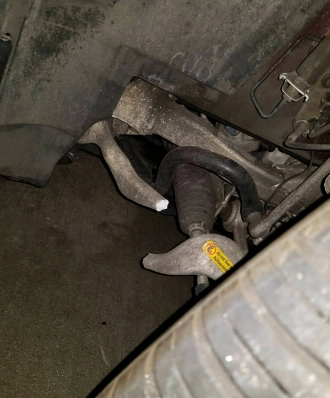
Figure 1: Fractured Aluminum Alloy Control Arm
1. Poor Impact ResistanceIn severe impacts, aluminum alloy may fracture directly, whereas steel typically only bends or deforms.Once fractured, it must be replaced entirely—repair or welding is not feasible.
2. No "Fatigue Limit"Steel can endure virtually infinite load cycles below a certain stress threshold, while aluminum alloy may accumulate micro-cracks over time even under low stress.Consequently, once a crack initiates in an aluminum control arm, it propagates rapidly, often leading to sudden failure.
3. High Repair CostsA single aluminum control arm typically costs several thousand to over ten thousand yuan to replace. By comparison, a damaged steel control arm may cost only a few hundred yuan and can often be repaired through welding or straightening.

Figure 2: Fracture at the Rear Lower Control Arm Mount of a Tesla Model S
Don’t be fooled by the slender appearance of steel control arms—they actually offer several advantages:
· Sufficient strength: More than adequate for the normal service life of a vehicle.
· Excellent impact resistance: In a collision, they tend to bend rather than break, which can actually enhance safety.
· Low cost and easy repair: Damaged arms can often be straightened or replaced at minimal expense.
For these reasons, steel control arms are commonly used in family cars and utility vehicles, offering exceptional value for money.
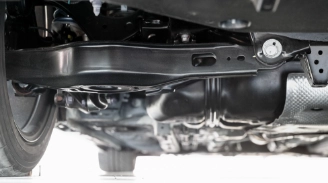
Figure 3: Steel Lower Control Arm
• Luxury/Sports Cars: Prioritizing weight reduction, ride comfort, and handling precision → aluminum alloy control arms are more suitable.
• Family/Utility Vehicles: Emphasizing cost-effectiveness, durability, and affordable repairs → steel control arms offer greater practicality.

Robust aluminum alloy control arms" are not inherently stronger—their bulky appearance is simply a result of material properties requiring larger cross-sections to achieve equivalent strength. Their true value lies in weight reduction, corrosion resistance, and premium perception, making them suitable for vehicles prioritizing performance and driving experience.
Stamped steel control arms, though visually unassuming, remain the preferred choice for family and utility vehicles thanks to their durability, reliability, and cost-effectiveness.
✅ One-sentence conclusion: Don't be misled by "robust" appearances—choosing the right vehicle depends on your actual needs and intended use, which is the wisest approach.
A high-quality control arm also requires equally premium and durable suspension bushings. We warmly welcome your purchase of VDI Suspension bushing 7P0525337E .