
In discussions on vehicle lightweighting, the control arm is often regarded as a "standard component" or "mature part." However, driven by trends in electrification, high-performance engineering, and platform modularization, it is quietly undergoing a transformative shift—from a passive load-bearing element to an active performance amplifier. Particularly within suspension systems, every 1 kg reduction in unsprung mass contributed by the control arm yields not only energy efficiency gains but also system-level improvements in handling stability, ride comfort, and NVH performance.
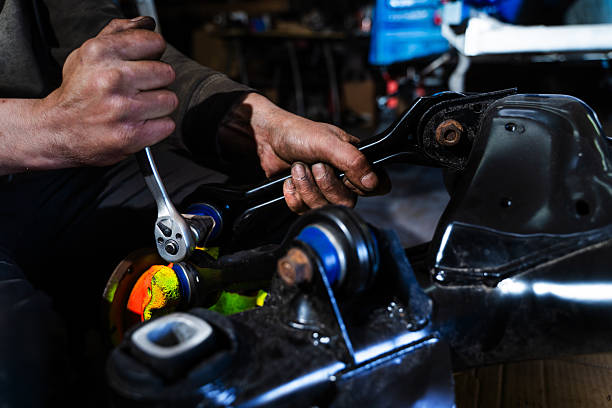
From an engineering perspective, the control arm exhibits three defining characteristics:
① High-frequency motion + unsprung mass attribute→ Highly sensitive to vehicle handling, vibration filtering, and response speed
② Structurally complex yet with well-defined load paths→ Ideal candidate for weight reduction through topology optimization and material upgrades
③ High platform commonality across vehicle models→ Lightweighting achievements can be easily scaled and replicated
This is precisely why, under multi-link suspension architectures and electric vehicle platforms, the control arm often ranks among the first components targeted for weight reduction.
1. Material Upgrades Remain the Foundation
● High-strength aluminum alloys (6xxx / 7xxx series)
● Forged aluminum + localized cast hybrid structures
● Metal-composite hybrid solutions
In representative practice, Rockman Industries has achieved 20–30% structural weight reduction through an integrated high-pressure aluminum die-casting and precision machining solution—while maintaining fatigue life requirements. This approach has already entered mass production on multiple new energy vehicle platforms.
2. Structural Re-engineering Is the "Second Growth Curve" More critical than materials is the redefinition of load-path mechanics:
● Hollow structures driven by topology optimization
● Multi-section variable-thickness designs
● Local reinforcement at bushing zones + aggressive thinning in non-critical areas
Teknia, in European customer projects, has leveraged CAE-driven geometric re-engineering to deliver:≈25% weight reduction with increased stiffnessSuch solutions are gradually migrating from premium vehicles to mainstream platforms.
3. Composites Are Unlocking the "Performance Ceiling"For ultra-high-performance and extreme lightweighting scenarios, composite solutions are gaining engineering attention. Hexcel's high-performance composites have been validated in prototype and low-volume production programs for high-end performance vehicle control arms, demonstrating:
● Weight reduction of 40%+
● Significantly enhanced stiffness and fatigue performance
● Extremely demanding requirements on cost and process consistency
Currently, composites remain primarily in the technology reserve and premium application phase.
Control arm lightweighting is not a "single-point optimization"—it triggers system-wide ripple effects:
● Reduced unsprung mass → More refined road feel
● Lower inertia → More direct steering response
● Redistributed loads → Extended bushing life and improved NVH performance
More importantly, it provides a cleaner, more controllable physical foundation for intelligent suspensions, steer-by-wire systems, and chassis control algorithms.
Next Phase: The "Role Upgrade" of the Control Arm Is UnderwayIndustry trends indicate a triple evolution:Structural component → Functional component → Carrier for data and control interfaces
● Pre-integrated sensor/strain monitoring interfaces
● Co-designed with intelligent suspension algorithms
● Module-level development for platform scalability
Lightweighting is merely the first step.True technological inflection points often hide in "invisible" places. The control arm is precisely such a low-profile yet high-value core chassis component.
Whoever first establishes a closed-loop capability across materials, structure, and system integration will gain the upper hand in next-generation platform competition.
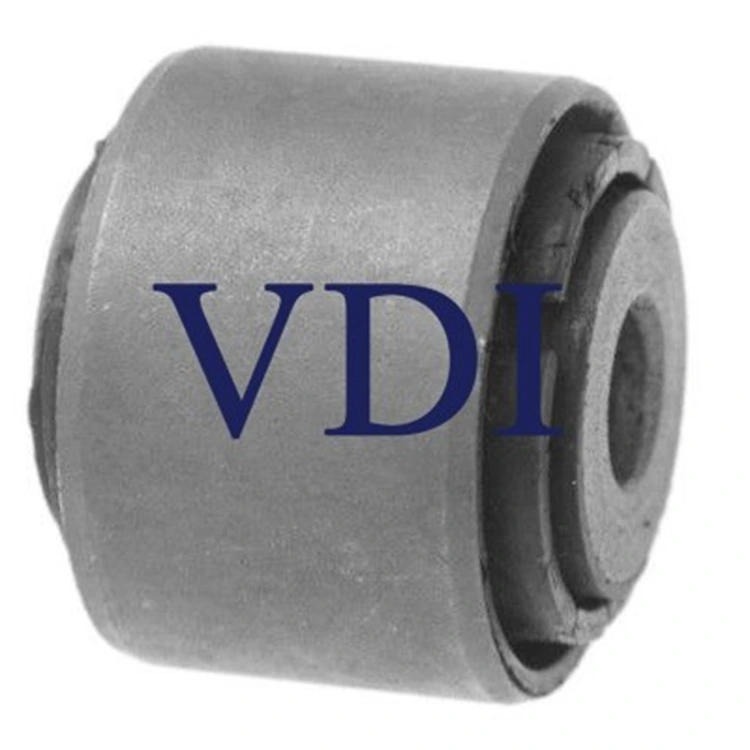
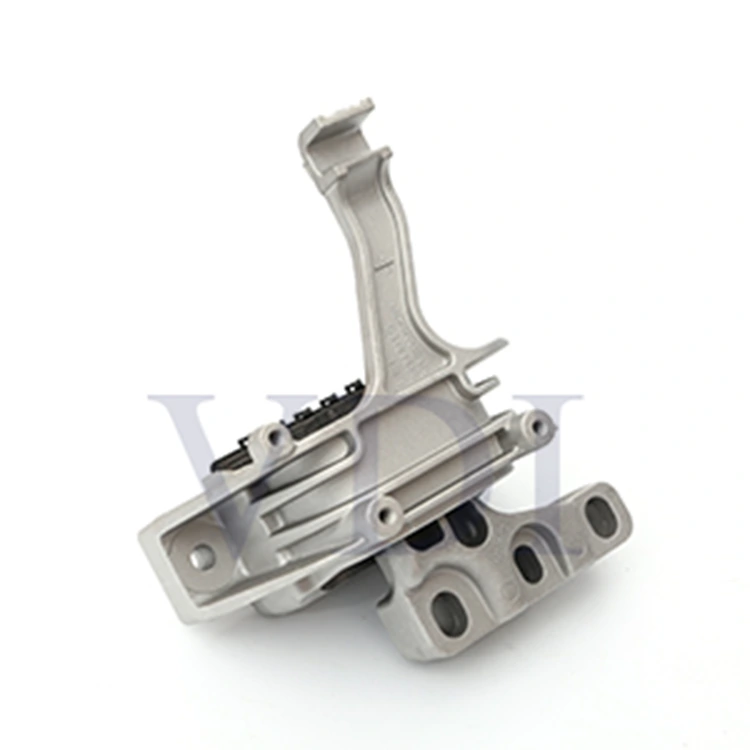
A high-quality control arm also requires equally premium and durable suspension bushings. We warmly welcome your purchase of VDI Suspension bushing 7L6525337A.