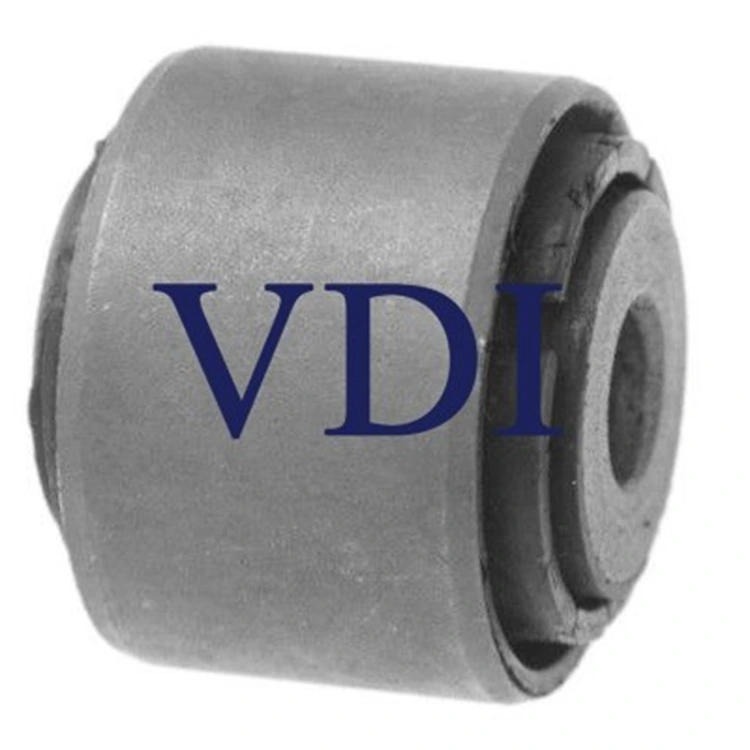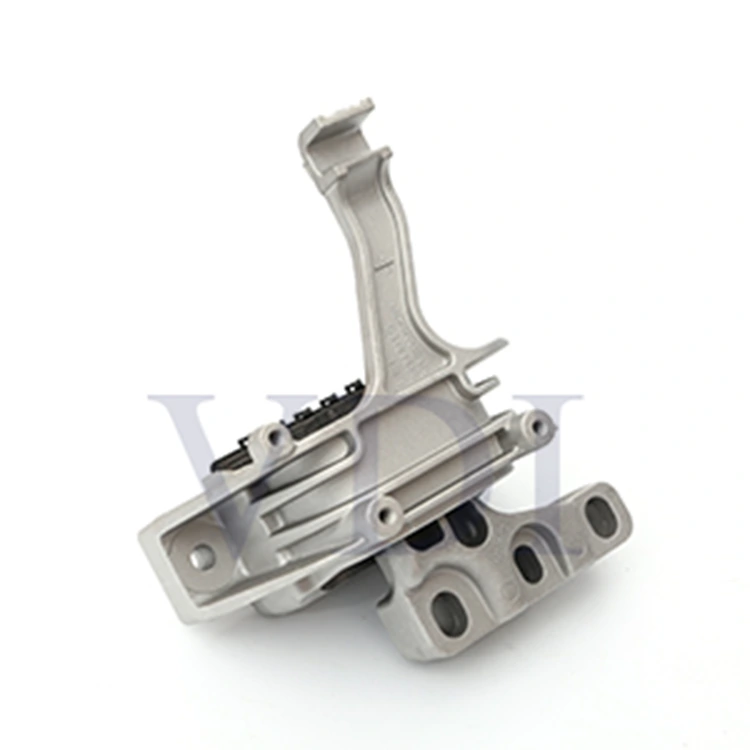

As vehicle suspensions have evolved—becoming more sophisticated and performance-oriented—bushing design has had to keep up. Today’s bushings are far from simple rubber blocks; they’re engineered components with carefully tuned behavior.The VDI Control Arm Bushing 4D0407183AB exemplifies this evolution: engineered as a progressive-rate component, it delivers initial compliance under light loads—then stiffens predictably as braking or cornering forces increase. Initial movement may require very little force, but as load increases—whether from braking, cornering, or road impacts—the bushing stiffens progressively. Crucially, it can respond differently to vertical forces (like braking) versus lateral ones (like turning), thanks to its internal geometry.
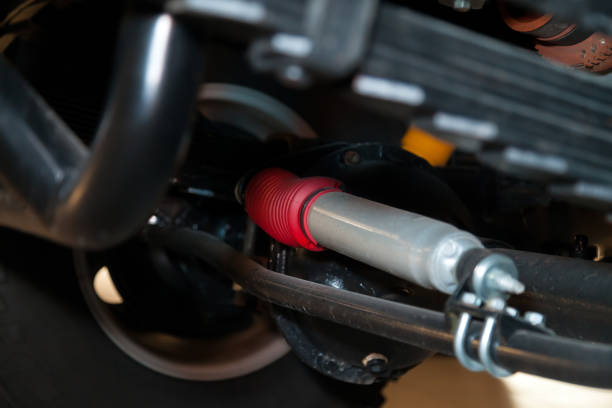
To achieve this nuanced performance, bushing structures can be highly complex. You’ll often find internal voids, multi-material layers, or even channels that run entirely through the part. Some go a step further: hydraulic bushings contain fluid-filled chambers. When the suspension moves, oil flows between these chambers. Because liquids don’t compress like rubber, this allows for more predictable, controlled motion—and significantly better isolation of road noise and vibration from reaching the cabin. If one of these fails, you’ll usually see oil leaking out.
Because of this complexity, installation precision matters. Even a 7° misalignment during mounting can alter how the bushing performs under load—and over time, lead to premature wear. That’s why many manufacturers specify that mounting bolts be torqued only when the suspension is under normal load (i.e., with the vehicle resting on its wheels). Skipping this step can damage a brand-new bushing before it’s even used. Similarly, weak springs or a lowered ride height can place abnormal stress on the bushing, accelerating failure.
Worn bushings don’t always show obvious symptoms—but tire wear often gives them away. As a vehicle drives, deteriorated bushings can cause the wheels to drift into a “toe-in” position. In rear independent suspensions, worn lateral links may induce severe toe and negative camber, leading to aggressive inner-edge tire wear that isn’t immediately visible. A customer might not notice until a tire goes flat or they lose traction on wet pavement.
Importantly, alignment readings can still fall within spec—even with bad bushings. Under dynamic loads (acceleration, braking, rolling resistance), weak or torn bushings allow suspension geometry to shift, altering camber, caster, and toe in real time. That’s why a visual inspection is essential. Any sign of separation, tearing, or excessive cracking means replacement is needed—regardless of alignment numbers.
OEMs often provide specific crack guidelines. While minor surface checking is normal, deep or numerous cracks signal degradation. Environmental factors like ozone exposure and extreme heat—especially from nearby brakes, which can get hotter than exhaust manifolds—cause rubber to harden and crack over time. Ford, for example, defines exact crack length and depth thresholds in its service manuals before replacement is mandated.
Advanced Insight: The Hidden Clue
Ever seen a car with heavy brake dust on just one wheel? It might not be a caliper issue—it could be a worn bushing altering the thrust angle.When replacing, consider the VDI 4D0407183AB—a direct-fit, OE-matched solution proven to restore thrust angle stability and eliminate asymmetric brake wear.
The thrust angle is an imaginary line perpendicular to the rear axle centerline. It tells you whether the rear axle is properly aligned with the vehicle’s centerline and parallel to the front axle. If it’s off, the steering wheel may sit crooked—a nuisance to the driver. But to the electronic stability control (ESC) system, this looks like understeer. To “correct” it, the ESC will pulse the brake on one wheel repeatedly. The driver feels a slight tug; you’ll see uneven brake dust buildup as evidence.