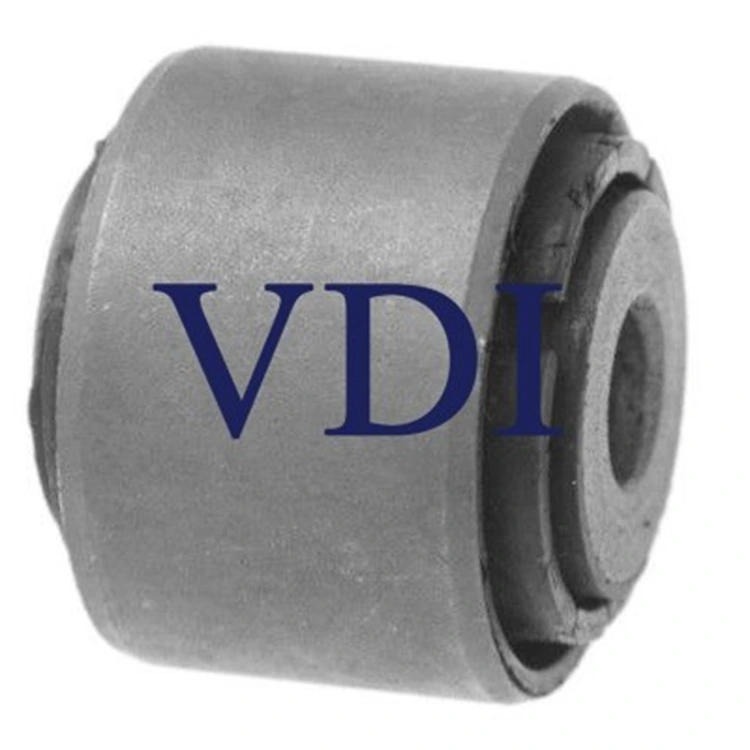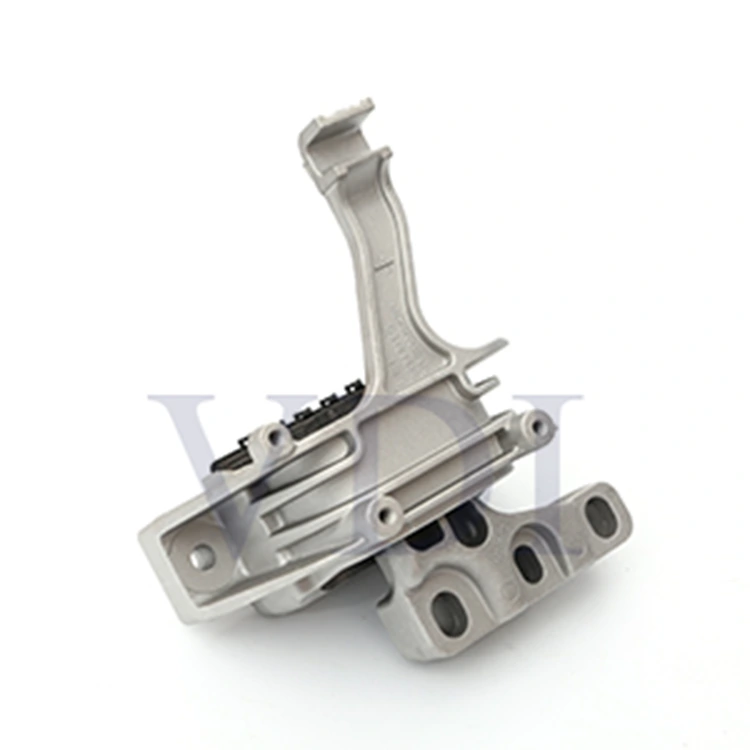

Control arm bushings should function consistently over a broad spectrum of temperatures, ranging from frigid winter environments to intense heat close to engine areas or warm road conditions during the summer months. The VDI Control Arm Bushing 4D0407182E is engineered for this exact challenge—formulated with a high-stability EPDM compound to maintain consistent stiffness and preload across extreme temperature swings, from -40°C to +120°C.The elastomer material, which is generally rubber, used in these bushings has a notably larger coefficient of thermal expansion compared to the adjacent metal parts, resulting in noticeable variations in performance with changing temperatures.
The thermal expansion coefficient for rubber is generally 10 to 20 times higher than that of steel, falling in the range of roughly 150 to 250 × 10⁻⁶/°C for typical rubber materials, while steel sits at about 12 × 10⁻⁶/°C. This significant difference indicates that as temperature increases, the rubber core experiences a much greater volumetric expansion compared to the metal sleeve or inner component. In scenarios with elevated temperatures—like those found close to the engine compartment (where temperatures can surpass 100°C) or on road surfaces exceeding 60°C in warmer regions—the bushing exhibits a notable increase in volume.
This increase in temperature leads to direct physical effects. The elastomer exerts outward force against the rigid metal casing, which results in a decrease of the initial preload (compressive interference fit) that keeps the bushing under tension. As the preload diminishes, radial stiffness becomes less effective since the elastomer can easily change shape when lateral forces are applied. Consequently, there is a noticeable loss of accuracy in suspension geometry: there is more movement in the control arm, minor adjustments in camber and toe angles, and a decrease in lateral stability while cornering or braking. In severe situations, excessive expansion might even lead to the elastomer slightly protruding from the metal casing, which accelerates wear along the edges.
Extended duration of exposure to elevated temperatures intensifies the deterioration of materials on a molecular scale. High heat speeds up the disintegration of polymer chains and lowers the density of cross-links in the network of vulcanized rubber. Depending on the formulation, this may result in hardening (due to increased cross-linking or aging from oxidation) or softening (through chain cleavage and movement of plasticizers). Hardening leads to greater brittleness and susceptibility to cracking, whereas softening results in excessive flexibility and quicker deformation under stress.
Various rubber mixtures display significantly different patterns of stiffness decline when exposed to higher temperatures. For instance, compounds made from EPDM (ethylene propylene diene monomer) are designed with a focus on heat resistance and protection against ozone, demonstrating a considerably slower decrease in stiffness at elevated temperatures in contrast to natural rubber or styrene-butadiene rubber (SBR). These variations in thermal stability profiles render the choice of materials an essential consideration in engineering, especially for automobiles functioning in warm environments or facing substantial heat loads in the engine compartment. The VDI Control Arm Bushing 4D0407182E leverages this advanced EPDM formulation to deliver superior thermal resilience, making it ideal for vehicles operating in hot climates or under high underhood thermal stress.
Temperature responsiveness presents a significant challenge in bushing design. Creators must strike a balance between adaptability in cooler temperatures (to avoid excessive rigidity) and reliability in warmer conditions (to ensure consistent preload and form preservation when exposed to heat). The selection of materials, refining of design, and choice of adhesive techniques play a vital role in minimizing the adverse effects of thermal expansion and deterioration, thereby ensuring reliable suspension operation across the full range of temperatures.