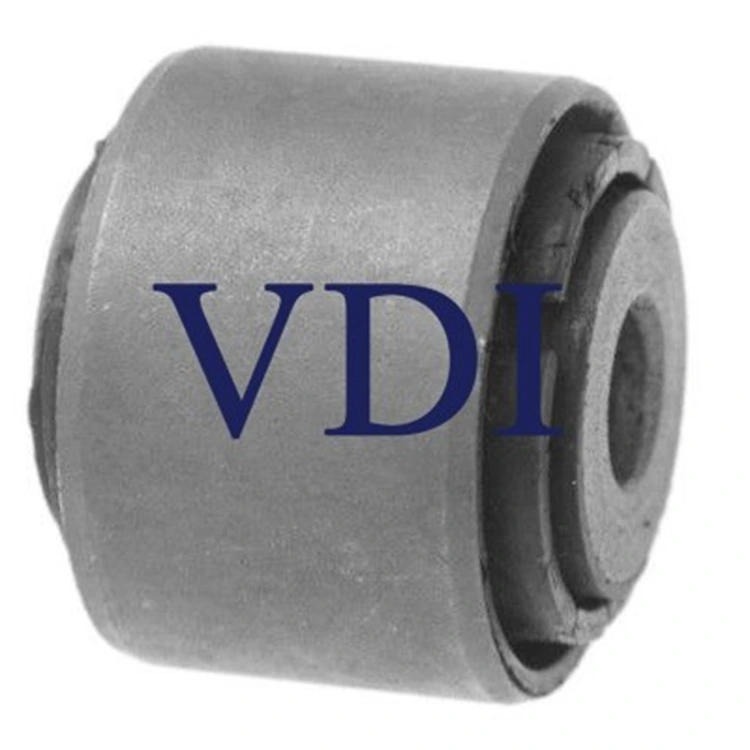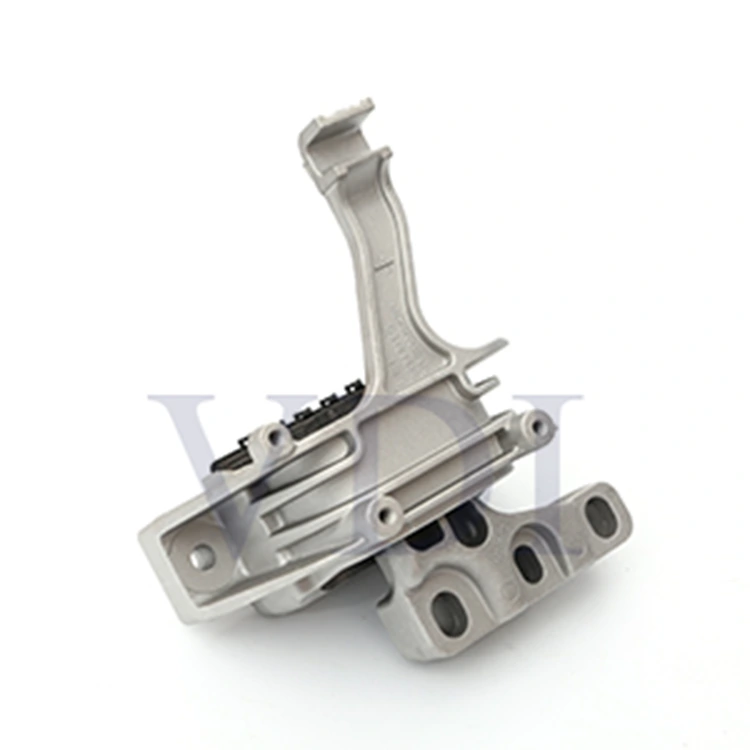

Control arm bushings operate in one of the most demanding environments within a vehicle's suspension system. They are subjected to multi-axial composite loading that includes axial compression (vertical road inputs), radial shear (lateral cornering forces), and torsional stresses (braking, acceleration, and steering inputs). This complex, time-varying stress state is far more severe than uniaxial loading and is the primary reason why fatigue remains the dominant failure mode for these components over their service life. The VDI Control Arm Bushing 4D0407181H is specifically engineered to withstand this harsh multi-axial environment, featuring optimized geometry and advanced elastomer formulation to resist crack initiation under combined shear, compression, and torsion.
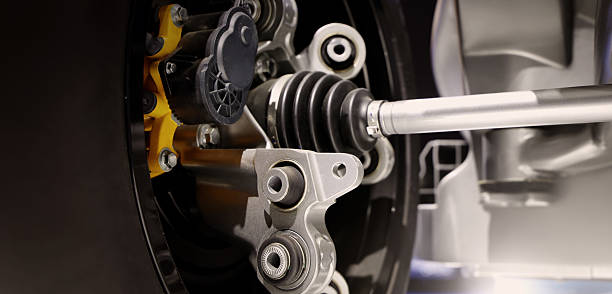
The most frequent type of fatigue failure starts with the formation of tiny cracks within the elastomer material. These small fractures emerge in areas experiencing significant local stress buildup and slowly expand when subjected to ongoing cyclic forces. After they begin, the fractures evolve into noticeable larger tears, which eventually result in a decrease in stiffness, increased looseness, and altered suspension alignment. This progression is gradual: tiny cracks first arise due to repeated shear and tensile loads, then merge and extend along the routes of maximum principal stress or shear planes.
Crack initiation points are not arbitrary. Finite element modeling (FEM) reliably indicates that the most significant stress concentrations arise in specific areas:
The edges of the internal metallic sleeve, where sudden changes in geometry result in steep stress variations.
Locations where there are abrupt alterations in rubber thickness, such as at the corners or steps of the elastomer design.
Regions adjacent to the joined metal-rubber interface, particularly when subjected to simultaneous shear and peel stress.
In conditions of high-cycle fatigue (generally exceeding 10⁶ cycles, linked to the typical lifespan of vehicles), the primary factor influencing the growth of cracks is peak shear stress. Different from tensile fatigue seen in metals, rubber experiences fatigue that is significantly influenced by shear since the molecular structures are stretched and ruptured across shear surfaces. Finite Element Analysis simulations demonstrate that the greatest shear stress often aligns with the points where micro-cracks initially form, thereby reinforcing the idea that shear acts as the key mechanism in practical multi-axial operating environments. Bushings designed for enhanced fatigue durability utilize various strategies in their construction to postpone the onset of cracks and reduce their advancement:
Adjusted rubber thickness layout to reduce high stress concentrations and create a more even distribution of stress fields. Refined geometric transitions, such as fillets, chamfers, or gradual changes in thickness, to lessen localized stress points. Diligent oversight of the bonding interface quality to avert premature delamination that could lead to new sites for initiation.
These strategies effectively enhance the fatigue lifespan by decreasing the peak shear stress amplitude and slowing down the crack growth rate. Incorporating all these principles, the VDI Control Arm Bushing 4D0407181H demonstrates superior resistance to high-cycle fatigue, validated through millions of cycles in dynamic multi-axis testing that replicates real-world suspension loads.In real-world applications, premium bushings show noticeably slower crack advancement rates when subjected to the same loading conditions, enabling them to endure millions of cycles with little decline in performance. Grasping these fatigue processes and how they relate to multi-axial shear stress has become essential in contemporary bushing innovation. With the aid of sophisticated finite element analysis, material evaluations, and correlations to real-world scenarios, engineers can now foresee and address fatigue failures well before they manifest, leading to suspension components that are more dependable and have a longer service life.