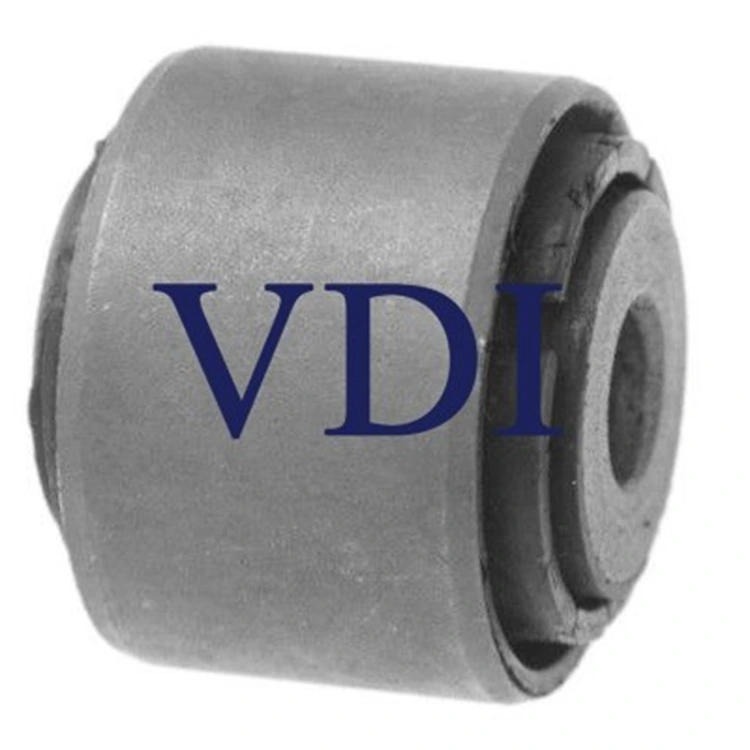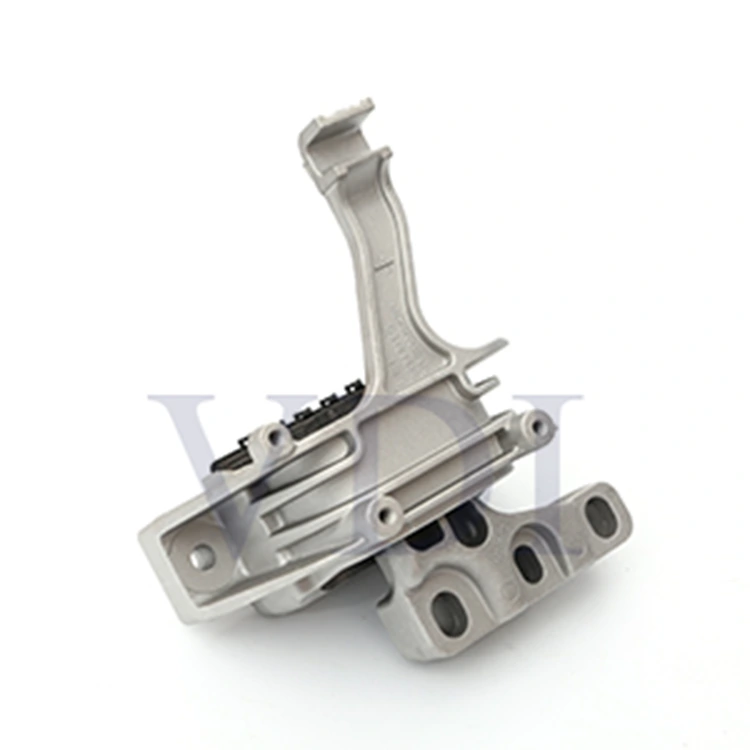

The automotive industry's prevalent movement toward lightweight materials has been propelled by strict regulations on fuel efficiency, the increasing popularity of electric vehicles, and the quest for enhanced handling performance. Although control arm bushings are considered minor parts, they too are part of this transformation. Their design has significantly evolved to lower weight while maintaining or even enhancing essential performance aspects like stiffness, durability, and vibration dampening. The VDI Control Arm Bushing 4H0407182B exemplifies this modern approach—engineered with optimized geometry and advanced materials to achieve weight savings without sacrificing structural integrity or dynamic performance.
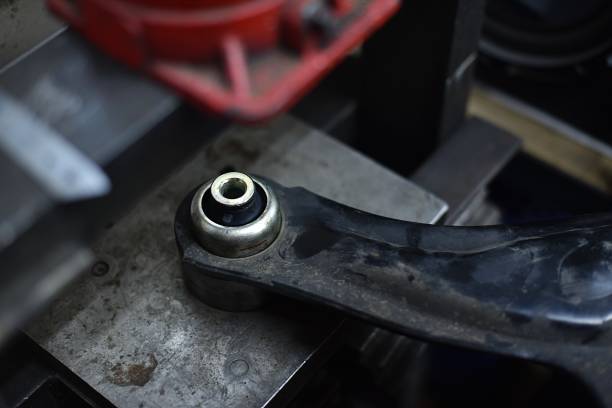
Traditionally, a control arm bushing's exterior metal casing was crafted from a sturdy steel cylinder with thick walls, offering strong structural integrity and a dependable surface for the bonding of elastomer and metal. The exceptional strength of steel, along with its affordability, established it as the standard option for many years. Yet, as automobile producers aimed to decrease unsprung weight (parts that are not held up by suspension springs, such as wheels, hubs, brakes, and suspension connections), the bulky steel casing became a focal point for improvement.
The transition started with the implementation of high-strength steel (HSS) that features thin walls. By utilizing advanced high-strength low-alloy (AHSS) types that possess yield strengths higher than 500–800 MPa, engineers were able to considerably decrease wall thickness—typically by 30–50%—without compromising load-bearing ability or bond integrity. This slimmer steel covering provides the essential hoop strength required to withstand radial crushing forces while also reducing weight.
In scenarios where minimizing weight is crucial, particularly in electric and luxury cars, aluminum alloys have entirely replaced steel for the exterior shell. Weighing about one-third of steel (2.7 g/cm³ compared to 7.8 g/cm³), aluminum enables substantial reductions in total weight. To compensate for aluminum's lower modulus of elasticity and its comparatively weaker strength against steel, sleeves are often designed with slightly larger diameters or additional support ribs, ensuring comparable stability and durability against fatigue.
At the same time, the amount of elastomer (rubber or modern polymer core) has been decreased to lessen the total weight of the bushing. To preserve the ability to bear loads and the stiffness even with reduced material, engineers adjust the internal design:
●The ratios of inner bore diameter to wall thickness are revised through finite element analysis (FEA) to reach the desired radial and axial stiffness while minimizing rubber usage.
●More streamlined cross-sectional shapes are introduced to take the place of basic cylindrical shapes. Shapes that are not circular (such as oval or polygonal) direct material to locations where stresses are greatest, enhancing shear resistance.
●Eccentric configurations (where the inner sleeve is offset from the outer) create uneven stiffness characteristics—greater in one direction for torque or lateral load endurance, and lesser in other directions for flexibility—without needing additional material.
These geometric enhancements guarantee that the bushing provides comparable or enhanced performance regarding radial load capacity, torsional rigidity, and durability, even with the lower mass. Consequently, there is a noticeable reduction in unsprung weight, which positively affects the response time of the suspension, lowers inertia in the wheel assembly, and improves the accuracy of transient handling (such as faster turn-in and superior bump absorption).
In addition to managing advantages, a reduction in unsprung weight aids in achieving greater efficiency. In vehicles powered by internal combustion engines, a decrease in rolling drag and mass-related losses results in slight, yet additive enhancements in fuel effectiveness. In the case of electric vehicles, minimizing the suspension weight by even a small amount enhances the distance the vehicle can travel by lowering energy usage during both acceleration and regenerative braking phases.
Products like the VDI Control Arm Bushing 4H0407182B embody this transition—from robust metal sleeves to lightweight, high-strength steel or aluminum, along with enhanced elastomer shapes—demonstrates how even minor parts are being redesigned to satisfy the competing requirements of weight reduction, efficiency, and longevity in contemporary automobile engineering.