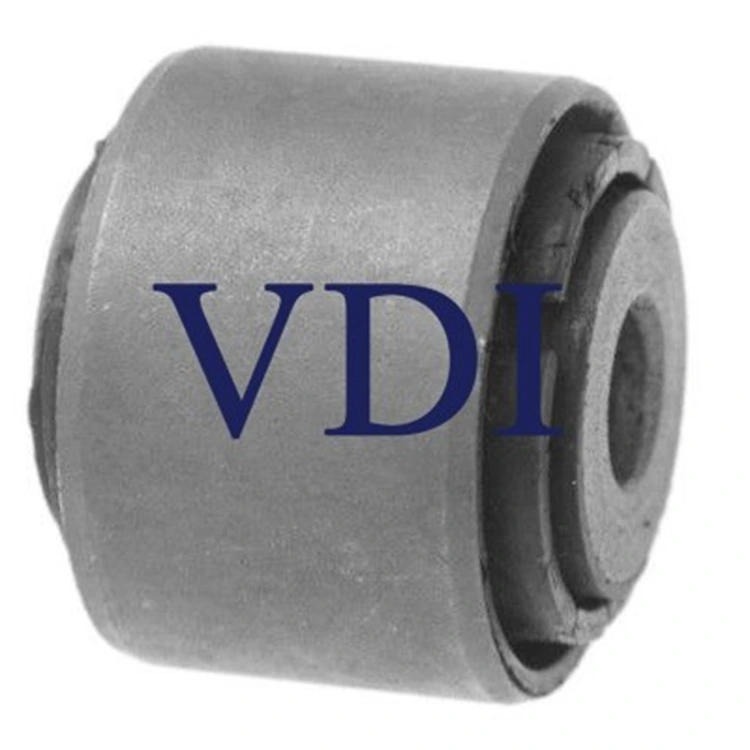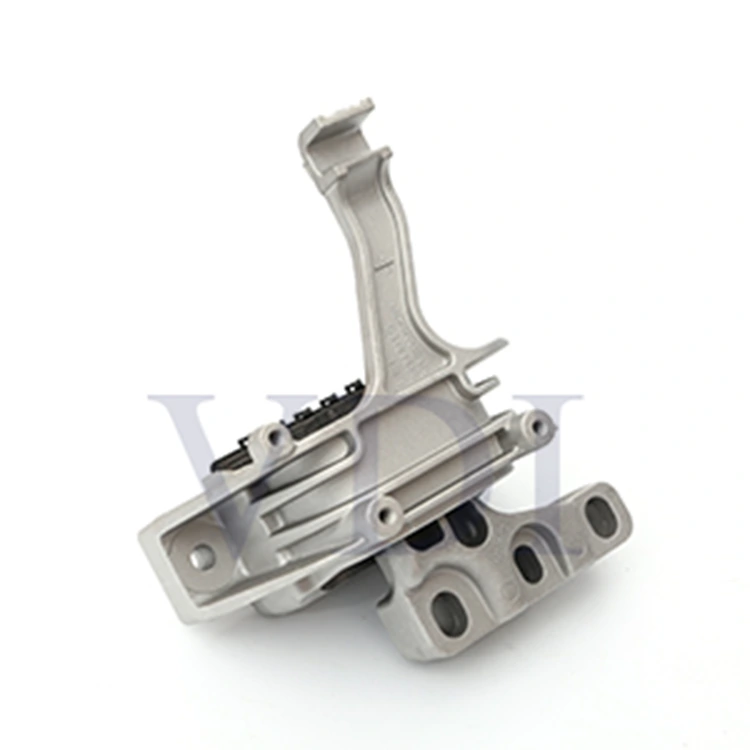

Control arm bushings fulfill two essential functions within contemporary vehicle suspension frameworks. In addition to their recognized purpose as dampers of vibration, they are pivotal components governing the control parameters of suspension kinematics, which examines the wheel's movement in relation to the chassis when under stress. In advanced configurations like multi-link or double-wishbone suspensions, the radial and axial stiffness associated with each bushing has a direct impact on the real-time trajectory of the tire concerning the vehicle's body.Engineered solutions like the VDI Control Arm Bushing 1K0505553 exemplify this dual-role design, delivering both precise kinematic control and superior NVH performance.
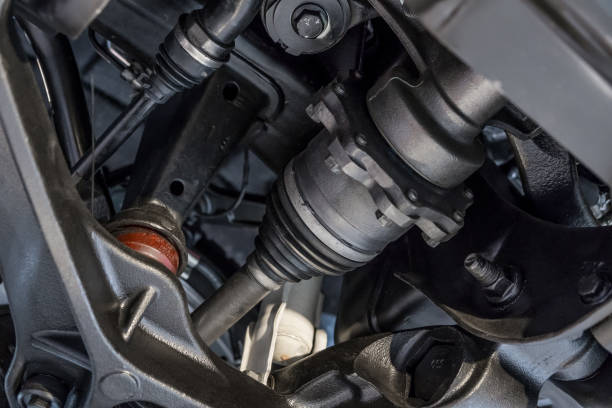
The notion of the instantaneous center (IC) is crucial in this context. The IC represents an imagined pivot point about which the control arm turns at any moment in time. Minor changes in the bushing, even as small as a few tenths of a millimeter, have the potential to alter this pivot point. A shift in the IC position modifies the suspension's kinematic patterns, especially affecting camber gain (the variation in camber angle for each unit of suspension movement) and toe variation (the alteration in toe angle). For instance, in situations of compression (bump), a well-calibrated bushing facilitates a planned negative camber gain, enhancing the tire's contact area on the outer wheel and boosting cornering traction. In the rebound phase, the same bushing needs to reduce toe movement to sustain neutral steering dynamics and prevent undesirable self-steering reactions.
Engineers accomplish this level of accuracy by precisely aligning the stiffness characteristics of each bushing throughout the suspension system. The radial stiffness, which is oriented at a right angle to the bushing axis, is usually greater to counteract side forces encountered while cornering. In contrast, the axial stiffness, which runs along the bushing axis, is reduced to allow for vertical flexibility. This careful adjustment guarantees that when the suspension compresses, the outer wheel develops negative camber to improve grip, while the inner wheel avoids too much positive camber, which could diminish traction. As the system rebounds, it reverts to a nearly neutral configuration to avert bump steer—an unfavorable toe-in or toe-out reaction over road irregularities that could lead to a jittery or unpredictable driving experience.
The allocation of stiffness between the front and rear axles, as well as between the left and right sides, is a crucial element affecting the dynamic geometric stability of a vehicle. Inconsistent stiffness levels in bushings can lead to unwanted changes in roll center height, anti-dive and anti-squat geometry, or Ackerman steering characteristics. Consequently, the distribution of bushing stiffness has become an essential consideration in suspension design, often optimized through computer simulations, including multi-body dynamics software, and validated on kinematic testing rigs before the development of prototypes.
In high-performance and luxury vehicles, such accurate kinematic control allows engineers to strike a balance between ride comfort and precise handling... For applications demanding OEM-level kinematic fidelity and durability—such as those addressed by the VDI Control Arm Bushing 1K0505553—this passive precision is critical to maintaining dynamic integrity across diverse road conditions.