
Electric vehicles (EVs) introduce distinct challenges to suspension components, particularly control arm bushings. Unlike internal combustion engine (ICE) vehicles, EVs feature a fundamentally different powertrain and mass distribution profile. The heavy battery pack, typically located low in the floorpan between the axles, lowers the vehicle's center of gravity significantly—often by 100–200 mm compared to equivalent ICE models. This shift improves cornering stability and reduces body roll, but it also increases the vertical load on the suspension under dynamic conditions, placing greater static and cyclic stress on bushings.
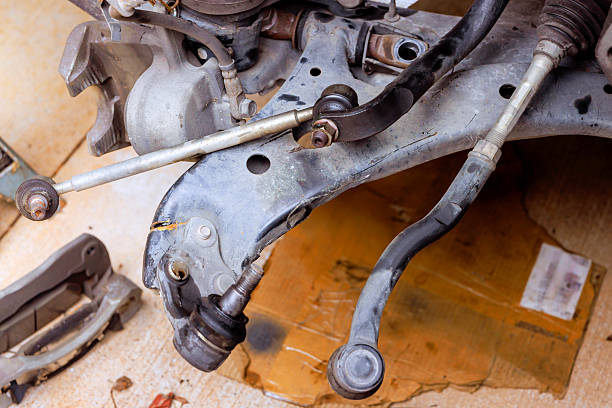
More importantly, electric motors provide torque profiles that contrast significantly with those of conventional engines. In internal combustion engine vehicles, maximum torque accumulates steadily throughout the rev range, influenced by the transmission and the flexibility of the driveline. In electric vehicles—particularly those with dual-motor all-wheel-drive setups—maximum torque can be engaged almost instantly from a complete stop, often surpassing 500–1000 Nm in just a few milliseconds. This swift torque delivery creates intense torsional shock and shear forces that propagate through the driveline and affect the suspension system. Control arm bushings, located at the connection point between the wheel and chassis, are responsible for managing these abrupt forces. The axial (along the bushing axis) and torsional shear stresses are significantly greater than those found in internal combustion engine scenarios, which can lead to quicker wear if the bushing does not have adequate compliance and damping in the necessary directions.
Furthermore, electric vehicles prioritize the maintenance of a silent cabin. Due to the absence of engine noise that typically masks sounds originating from the road and driveline, any noise, vibration, or harshness produced by the suspension system becomes much more noticeable. As a result, the bushings are required to perform exceptionally well over a broader frequency spectrum:
●Low-frequency spectrum (10–50 Hz): Sounds generated by the motor, inverter, and single-speed transmission noise.
●Mid-to-high frequency spectrum (50–300 Hz): Noise resulting from tire tread patterns and interactions with the road surface.
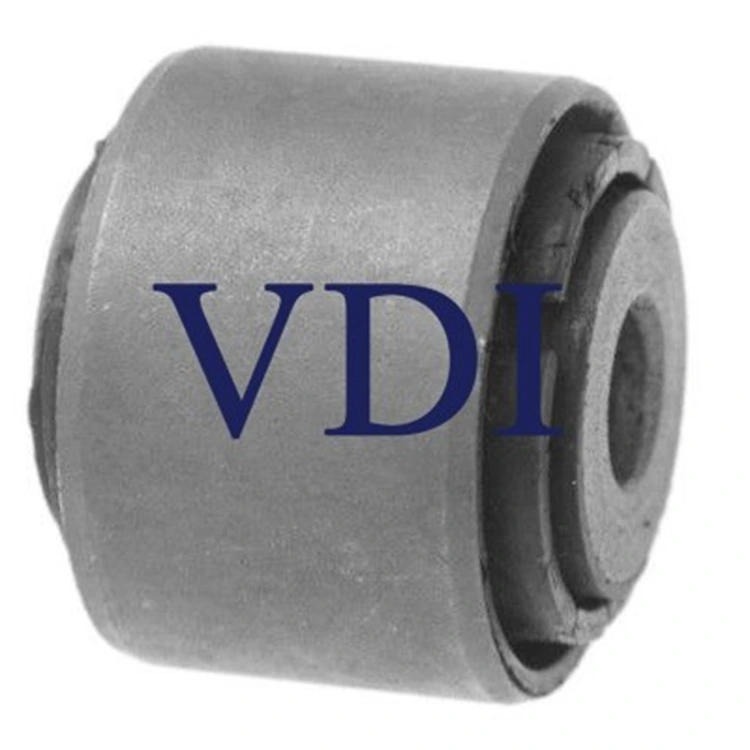
The elastomer within the bushing must effectively absorb vibrations within these frequency ranges while also providing durability under higher loads. Conventional bushings that are designed for vehicles with internal combustion engines may permit excessive high-frequency vibrations or may wear out prematurely when exposed to sudden increases in torque.In contrast, Control Arm Bushing 8N0407181B—designed for robust performance across a wide range of driving conditions—offers enhanced durability and consistent damping, making it a reliable choice for both conventional and evolving vehicle platforms.
To meet these requirements, modern EV suspension systems utilize unique bushing characteristics. It is typical to have uneven stiffness profiles: enhanced rigidity in the front-to-back direction to counteract torque-related twisting, paired with vertical flexibility for improved ride comfort. Certain companies integrate internal metal or composite restrictors that activate gradually under high loads, stopping excessive bending and safeguarding the elastomer from excessive stress. Additional advancements consist of hybrid designs or multi-material cores that adjust damping for designated frequency bands, providing effective low-frequency separation and high-frequency dampening.
These modifications illustrate the wider progression of suspension technology in the electric vehicle period. Although the essential function of control arm bushings—dampening vibrations while managing movement—has not altered, the distinct load characteristics and noise, vibration, and harshness expectations associated with electric vehicles necessitate more exact and purpose-driven designs. With advancements in battery energy concentration and an ongoing increase in torque delivery, bushing innovation will become more vital in providing the smooth, quiet, and stable driving experience that characterizes contemporary electric vehicles. Regardless of powertrain type, high-quality components like Control Arm Bushing 8N0407181B continue to deliver OEM-level precision, fatigue resistance, and NVH control—proving essential for modern suspension reliability.