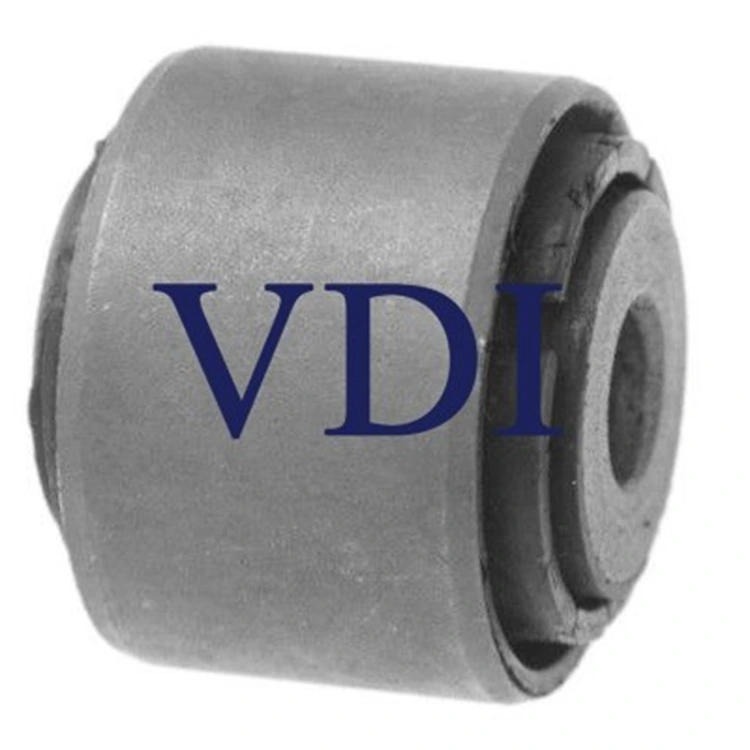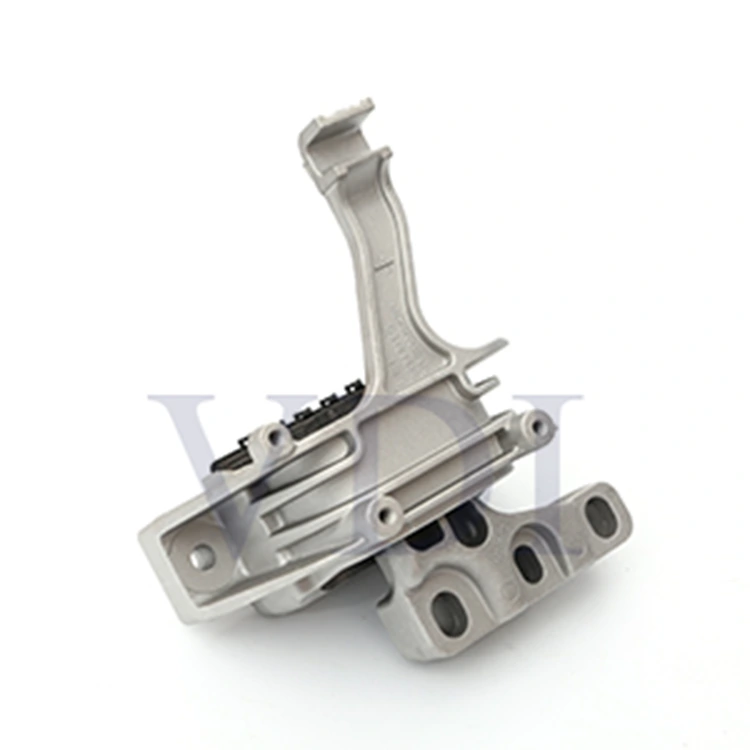

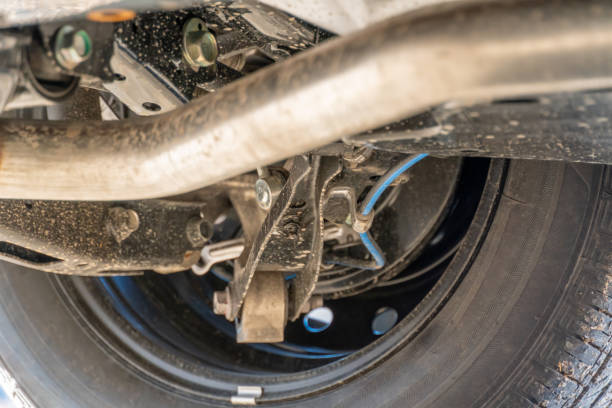
Control arm bushings, as important elastic connectors in the suspension system, primarily rely on polymer materials such as rubber or polyurethane to achieve vibration damping, cushioning, and positioning functions. The materials in Control Arm Bushing 1K0407183M gradually undergo performance degradation during long-term vehicle service—a process known as aging. The fundamental cause of aging is the breaking of chemical bonds, abnormal crosslinking, or physical structure damage in polymer chains under the influence of multiple environmental factors, ultimately leading to material hardening, cracking, loss of elasticity, and damping attenuation. Factors such as heat, oxygen, ozone, ultraviolet (UV) light, and oil contamination often coexist and create a synergistic coupling effect, causing the aging process to proceed far more rapidly than under any single factor alone.
Rubber materials—especially those containing unsaturated double bonds, such as natural rubber and styrene-butadiene rubber—are extremely sensitive to oxidation. The aging process mainly proceeds via a free-radical chain reaction. High temperature acts as a powerful accelerator of this process. In the automotive undercarriage environment, heat radiation from the road, residual engine heat, or summer high temperatures can keep bushing temperatures consistently above 80–100°C. Thermal energy causes intense molecular chain movement while simultaneously accelerating the diffusion of oxygen molecules into the rubber interior, triggering auto-oxidation. In the initial stage, oxidation increases molecular crosslinking, causing the material to gradually harden; in later stages, chain scission occurs, and strength drops sharply. Experiments show that after several hundred hours of continuous exposure to hot air, rubber often suffers a 30–70% reduction in tensile strength and an increase in hardness of 10–20 Shore A points.
Ozone is one of rubber’s most dangerous enemies. Even at atmospheric ozone concentrations as low as 0.01–0.1 ppm, it is sufficient to initiate cleavage reactions at unsaturated double bonds, forming unstable ozonides that further decompose and initiate cracks. This ozone-induced cracking typically starts at the surface and propagates perpendicular to the direction of stress. In regions with abundant sunlight, high-speed driving, or prolonged vehicle parking, ozone concentrations are higher, and crack propagation rates can reach several millimeters per year. Standard ozone aging tests show that after 72 hours of exposure at 50 pp hm ozone concentration and 40°C, susceptible rubber surfaces already exhibit visible cracking.
Ultraviolet (UV) radiation further exacerbates damage through photochemical action. UV light—particularly UVA and UVB bands—possesses high energy capable of directly breaking carbon-carbon or carbon-hydrogen bonds, generating free radicals. These free radicals combine with oxygen to trigger photo-oxidative aging. Prolonged exposure also promotes ozone generation, creating a vicious cycle. Bushing surfaces first show yellowing, chalking, and micro-cracks. Although internal degradation lags behind, overall elasticity is significantly reduced. On vehicles parked outdoors for long periods in hot, humid southern climates, UV exposure can shorten rubber service life by 30–50%.
Oil-based substances—such as engine oil, brake fluid, and road oil—cause swelling and plasticization effects. Hydrocarbon media penetrate into the rubber interior, extracting additives or causing volume expansion, which leads to reduced strength and increased permanent deformation. Although nitrile rubber exhibits some resistance to mineral oils, prolonged contact still reduces hardness and worsens deformation. The combination of oil and high temperature is especially severe, as heat accelerates both oil penetration and polymer chain degradation.
These factors exhibit strong synergistic interactions. High temperature promotes the diffusion of oxygen and ozone; UV radiation generates free radicals and indirectly increases ozone levels; oil softens the surface, making crack propagation easier. In extreme climates—such as hot, high-ozone desert or coastal regions—the performance degradation curve of rubber bushings often follows an exponential trend: slow changes in the first two to three years, followed by 20–40% stiffness loss over the next two to five years, after which cracks rapidly expand, leading to complete loss of cushioning function.
In contrast, polyurethane materials perform significantly better under these environmental conditions. Polyurethane has a highly saturated backbone with almost no vulnerable double bonds, making it nearly immune to ozone attack and eliminating typical cracking phenomena. Its resistance to UV radiation is also far superior to that of conventional rubber; prolonged exposure may cause only slight yellowing without severe structural damage. Polyurethane’s thermal decomposition temperature typically exceeds 150–200°C, giving it outstanding short-term heat resistance. In oil environments, its volume change rate is far lower than rubber’s—usually less than 5%, whereas rubber can swell by 20–50%. Industry testing and literature comparisons show that under combined thermal, ozone, and UV aging conditions, conventional rubber bushings experience 30–60% dynamic stiffness loss within 5–8 years, with noticeable damping decline leading to noise and handling degradation; under the same conditions, high-quality polyurethane limits degradation to 15–25%, extending service life by 2–3 times—sometimes even matching the vehicle’s full lifecycle. In extreme climates, polyurethane demonstrates stronger recovery capability and significantly lower permanent compression set than rubber.
Of course, polyurethane also has limitations—for example, its higher dynamic stiffness may provide slightly less high-frequency vibration isolation than rubber, resulting in marginally reduced ride comfort, and its cost is relatively higher. However, in terms of durability, environmental adaptability, and performance under extreme operating conditions, it has become an important development direction for high-performance suspension bushings.
Control arm bushing aging is an irreversible, multi-factor coupled process. Heat accelerates diffusion, ozone and UV directly break molecular chains, and oil exacerbates surface deterioration. Together, these factors typically limit the service life of conventional rubber to only 50,000–100,000 kilometers in real-world road use, depending on climate variations. Understanding these mechanisms helps in better material selection and formulation optimization—such as adding antioxidants and antiozonants—to extend bushing life and prevent premature suspension performance degradation. Welcome to order VDI Control Arm Bushing 1K0407183M!