
In automotive engineering, there’s an unwritten rule: true luxury isn’t found in leather seats or giant infotainment screens—it’s in what you don’t notice.
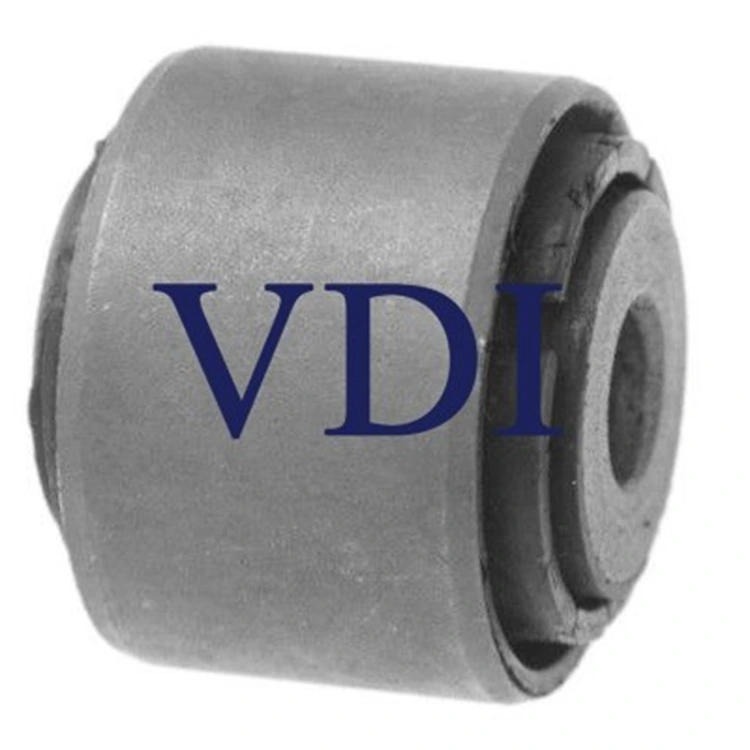
Among the unsung heroes of this “invisible” experience is the sway bar bushing—a small rubber component nestled between the subframe and anti-roll bar.
It generates no power. It plays no role in braking. Yet, on every corner, every bump, and every high-speed cruise, it quietly governs your vehicle’s dynamics and ride comfort.
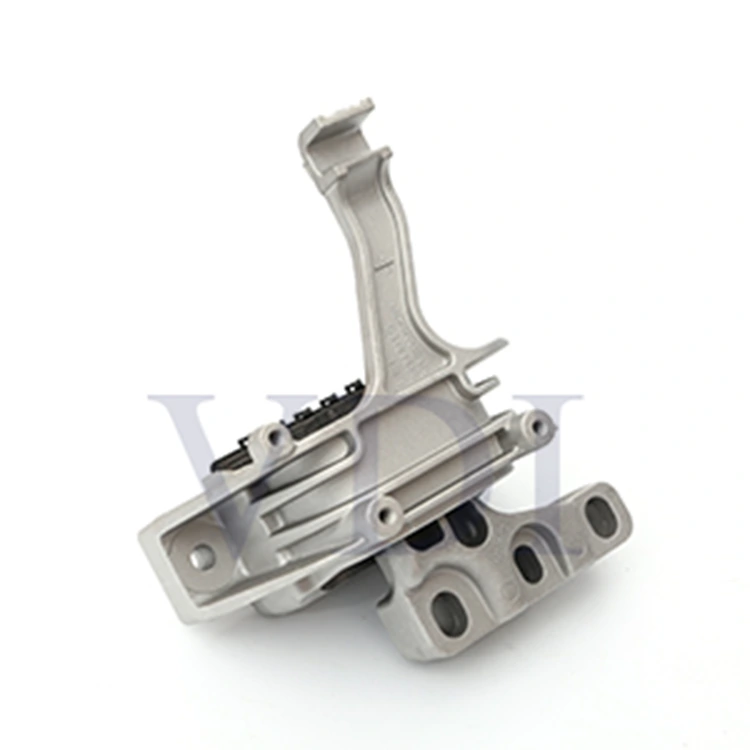
This article dives deep into how this “tiny part” delivers a “big experience”—through five key lenses: engineering principles, materials science, NVH control, failure mechanisms, and real-world driver perception.(The VDI Sway Bar Bushing 6Q0411314F delivers a more comfortable driving experience.)
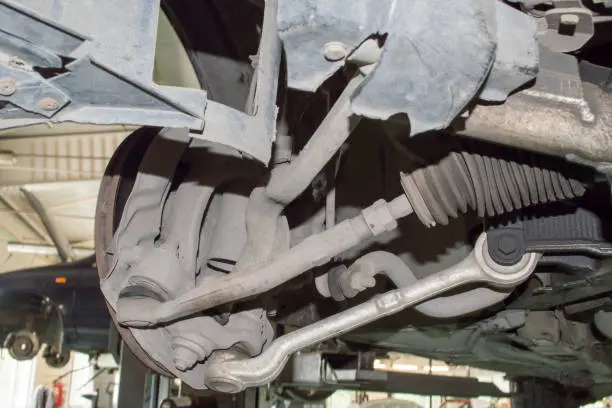
The anti-roll bar’s core job is to reduce body roll during cornering. When the left wheel compresses and the right extends, the bar twists, creating a counter-torque that keeps the body level.
The bushing’s role? To create a flexible, controlled link between the bar and the chassis. Its three critical functions:
●Isolate High-Frequency Vibration
●Road imperfections—like asphalt seams or gravel—induce suspension vibrations in the 50–500 Hz range. Without damping, these transmit directly into the cabin as a “buzzing” noise and hand fatigue. The rubber absorbs this energy through hysteresis, converting mechanical energy into heat.Manage Low-Frequency Dynamic Response
During cornering or lane changes, the sway bar experiences large, slow movements (0.5–5 Hz). A high-quality bushing strikes a precise balance:
→ Stiff enough to ensure responsive handling
→ Compliant enough to absorb shocks before they reach the cabin
●Too soft? The car wallows. Too hard? Every bump rattles your spine.Eliminate Metal-on-Metal Contact
Without a bushing, the steel sway bar grinds directly against its mounting bracket—causing “clunking” noises and accelerated wear. Rubber provides a non-metallic interface, silencing squeaks and rattles.✅ Engineering Analogy: Think of it as a low-pass filter in an audio system—it lets through essential low-frequency handling cues while filtering out high-frequency noise.
70% of bushing performance comes down to material. Three common types:
| Material | Pros | Cons | Typical Service Life |
| Natural Rubber (NR) | High elasticity, low cost | Poor oil/heat resistance, prone to aging | 2–3 years |
| Styrene-Butadiene Rubber (SBR) | Good wear resistance, economical | Becomes brittle in cold, softens in heat | 3–4 years |
| Hydrogenated Nitrile (HNBR) | Oil/heat resistant (-40°C to +125°C), anti-aging | Higher cost | 5–8+ years |
Standard bushings often use NR or SBR—fine for mild climates, but they harden and crack in Middle Eastern heat (50°C+) or become brittle in Russian winters (-30°C).
Premium bushings (like VDI) use HNBR or specialty EPDM compounds, enhanced with:
●Antioxidants & antiozonants to slow aging
●Optimized crosslink density for ideal stiffness/damping balance
●Dense surface structure to block dust and debris
NVH (Noise, Vibration, and Harshness) is a core metric of vehicle quality. Sway bar bushings directly impact two key NVH issues:
●Structure-Borne Noise
Road impact → suspension → sway bar → bushing → subframe → cabin.
●The bushing’s dynamic stiffness and **loss factor **(tan δ) determine how much vibration is absorbed. High-performance bushings can reduce vibration transmissibility by over 30% in the critical 20–200 Hz range.Squeak & Rattle
Worn bushings create clearance—leading to metal “clunks” or rubber “squeaks.”
Real-world data shows: replacing old bushings cuts NVH-related comebacks by 60%+ (source: German OEM aftersales report).
Lab Insight:In third-party testing, HNBR bushings showed <15% change in dynamic stiffness after 500 hours at 80°C—versus 45% degradation for standard SBR.
Bushing failure is rarely catastrophic—it’s usually gradual degradation + a triggering event:
●Long-term aging: Rubber oxidizes → hardens → loses damping
●Oil contamination: Leaking fluids cause swelling → geometric distortion
●Improper installation: Torquing off ride height → pre-load stress → early tearing
●Heavy-duty use: Constant high load → permanent compression set → clearance
Common symptoms:
● “Clunk” over speed bumps (impact from clearance)
●Body “wobbles twice” before settling in a lane change (loss of roll control)
●“Squeak” when turning in wet weather (dry rubber friction)
Though hidden, bushing condition directly shapes three key driving sensations:
| Perception | Good Bushing | Worn Bushing |
| Comfort | Fine road vibrations filtered; long drives feel effortless | Constant micro-vibrations in seat/wheel; fatigue sets in fast |
| Handling Confidence | Car stays flat in corners; immediate response | “Floaty” feel; constant steering corrections needed |
| Quietness | Only tire noise—chassis is silent | Frequent “clunks” and “ticks”—feels cheap |
Real-World Example:
A VW Polo ride-share driver noted: “After switching to VDI Sway Bar Bushing 6Q0411314F, passengers asked, ‘Why does this car suddenly feel so much more premium?’”
Once treated as generic hardware, bushings are now engineered components:
●Staggered durometer: Front bushings tuned stiffer for sharper steering; rears softer for comfort
●Asymmetric geometry: Different stiffness during turn-in vs. return-to-center
●Smart integration: Future systems may embed sensors to monitor bushing health and predict replacement
You won’t find sway bar bushings on a spec sheet. Salespeople won’t highlight them.
But they decide whether you’re willing to drive an extra 100 km on the weekend…
Whether you feel safe letting your child nap in the back seat…
Whether you truly trust your car.
As chassis engineers often say:
“A car’s quality isn’t measured by how fast it goes—but by how completely it makes you forget you’re driving.” Welcome to choose the VDI Sway Bar Bushing 6Q0411314F.