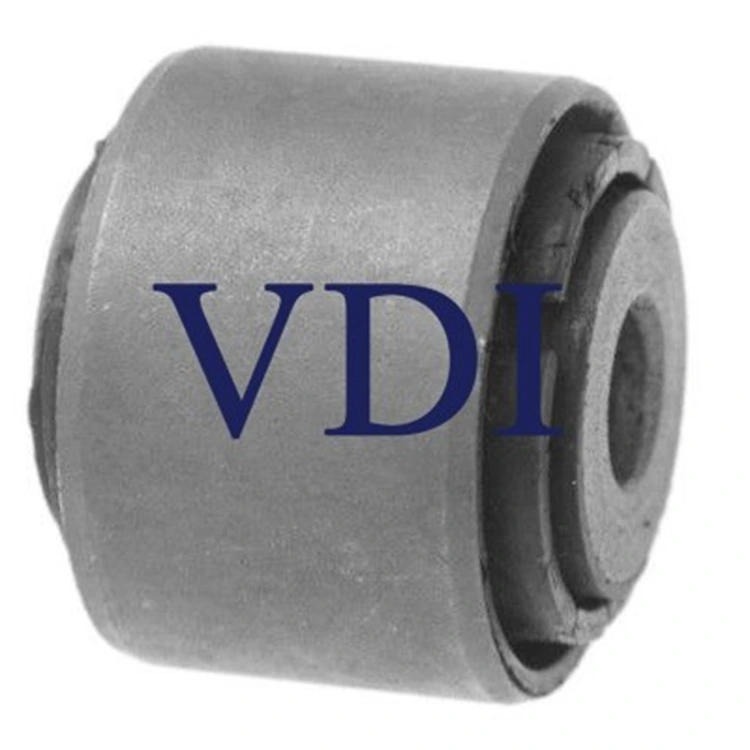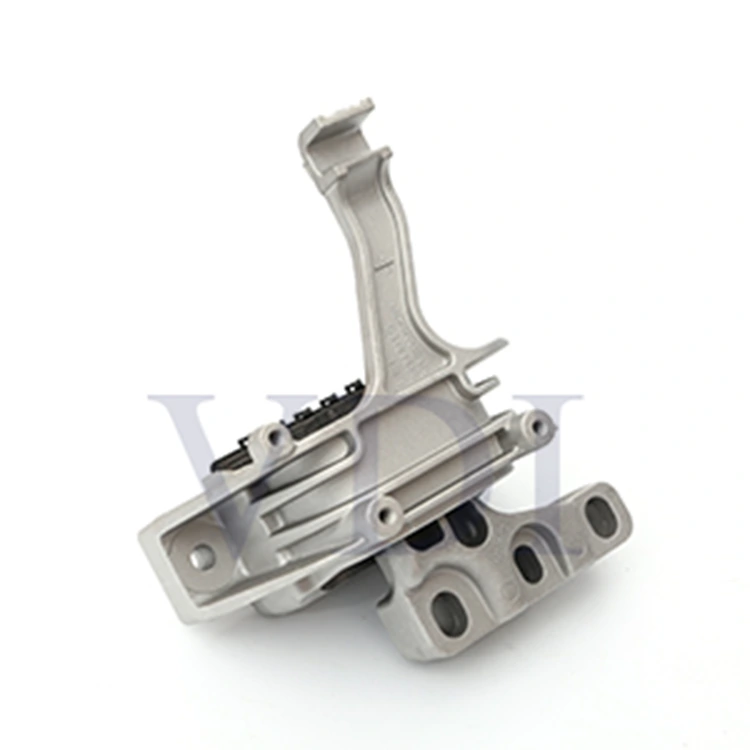

Sway bar bushings may be small, but they play a critical role in cornering stability, body roll control, and ride comfort. However, under harsh conditions—like Middle Eastern heat and dust, Russian winter cold, or constant heavy urban loads—standard rubber bushings often harden, crack, or develop clunks within months, degrading driving feel and handling.
The VDI Sway Bar Bushing 6Q0411314, designed for vehicles like the Volkswagen New Santana and VW Polo, delivers more reliable performance in these demanding environments through advanced material formulation and precision manufacturing.
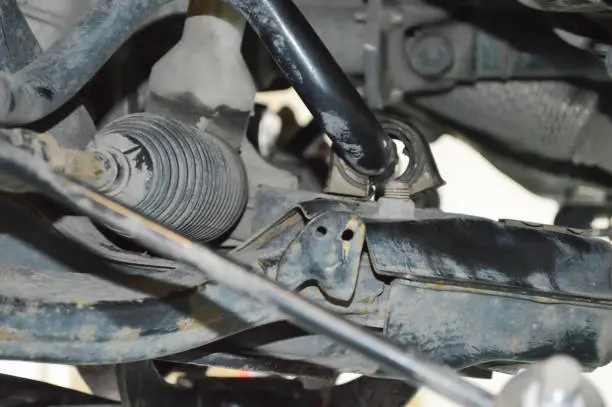
Typical Bushing Issues:
Most economy bushings use general-purpose rubber. At sustained temperatures above 45°C (113°F), they’re prone to oxidative aging, which increases hardness and reduces elasticity. Dust and sand can also enter the gap between the bushing and sway bar, accelerating wear and causing squeaks, clunks, or loose steering feel.
VDI’s Solution:
The VDI Sway Bar Bushing 6Q0411314 uses a high-temp rubber compound (such as hydrogenated nitrile – HNBR), engineered for better thermal stability:
Lab aging tests show significantly less hardness change vs. standard rubber at high temps;
Dense surface structure helps resist particle ingress;
Real-world installs in Saudi Arabia report no early hardening or cracking during summer operation.
Typical Bushing Issues:
Below -30°C (-22°F), many rubber compounds become stiff or brittle, losing the ability to absorb dynamic sway bar movement. On icy or rough roads, this can lead to cracks, deformation, or premature failure, compromising chassis control.
VDI’s Solution:
VDI optimizes its low-temp flexibility formula and vulcanization process to enhance cold-weather resilience:
Material maintains better flexibility in freezing conditions;
One-piece design reduces risk of delamination or bond failure;
Partner repair shops in Russia report no early failures due to cold-induced brittleness in winter fleet use.
Typical Bushing Issues:
For New Santana or VW Polo often used as ride-share or light cargo vehicles, constant high loads cause standard bushings to permanently deform. This increases fit clearance, leading to “clunk” over speed bumps or steering noise.
VDI’s Solution:
VDI’s compound is tuned for superior resistance to compression set:
Shows better shape recovery than many standard rubber bushings in simulated heavy-load testing;
Tight inner-diameter tolerances help ensure proper fit with OEM sway bars;
Ride-share operators in the Middle East note fewer customer complaints about “loose suspension feel” after switching to VDI.
Material Science: Uses rubber bases with balanced high-temp stability and low-temp flexibility;
Precision Manufacturing: Automated curing and dimensional checks ensure consistent quality;
Real-World Validation: Tested in actual high-heat, high-cold, and high-load environments to gather field feedback.
Primary Applications:
Volkswagen New Santana (T-VW platform)
VW Polo (5th & 6th generation)
Other PQ25/MQB-A0 platform derivatives
Recommended For:
Middle East & North Africa – hot, dusty climates
Russia & Eastern Europe – extreme winter use
Ride-share, delivery, or heavy-commute applications
Note: Actual performance may vary based on vehicle condition, driving style, and environmental factors. Always install by a qualified technician following manufacturer guidelines, and inspect suspension components regularly.