
What Defines a "Premium" Chassis? The Inherent Excellence Built into a Great Car! In just a few words: Solid. Taut. Supportive. Substantial. With excellent damping, precise steering response, refined quietness, effortless handling, and rock-solid straight-line stability.

Every driver has experienced this: after a vehicle accumulates tens of thousands of kilometers, the chassis begins to exhibit the anomalies described above. That once-immediate responsiveness, effortless driving feel, and solid suspension support gradually disappear. In short, as the vehicle ages, these refined sensations slowly fade away.
· During emergency braking, the chassis shudders and loses road grip
● At low speeds, the vehicle pulls to one side when crossing bumps
● The suspension feels loose, resulting in degraded handling
● Creaking noises occur when climbing hills, turning, or traversing speed bumps and road humps
● The vehicle fails to maintain straight-line stability and drifts unintentionally
The suspension system serves as the critical linkage between the chassis and wheels. Through elastic elements, shock absorbers, and force-transmitting mechanisms, it provides buffering, vibration damping, and controlled force transfer.
This discussion focuses specifically on rubber bushings.
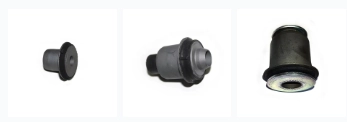
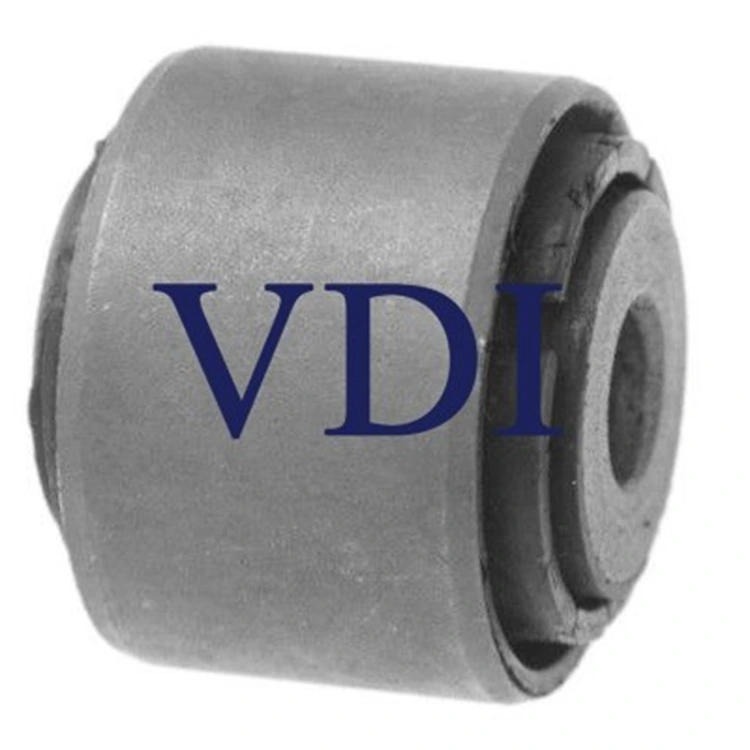
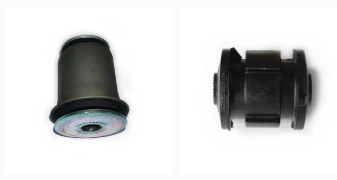
Within the chassis, components and pivot points are not rigidly connected by metal joints. Instead, they are linked via rubber-based bushings positioned precisely at the endpoints of suspension geometry—areas where forces concentrate. Lateral, longitudinal, and radial loads from the chassis continuously act upon the rubber bushing surfaces, subjecting these components to prolonged heavy stress. Combined with environmental degradation, the vulcanized bonding layer between the rubber and inner sleeve may fracture. Even without visible cracking, prolonged load fatigue causes the rubber material to soften and lose its ability to maintain precise positional constraints.
Solving excessive fatigue in vibration-dampening bushings—analysis of bushing-related issues:
● Vehicle pulls to one side when crossing bumps at low speed; softened bushing material fails to maintain positional constraints
● Loose suspension and degraded handling; aged and softened bushings cannot sustain required suspension support
● Creaking during hill climbs, turns, or speed bumps; cracked or delaminated bushings create internal friction and noise
● Inability to maintain straight-line driving; softened bushing material cannot preserve suspension geometry under load

Due to the impossibility of perfectly flat road surfaces, the vertical reaction forces acting on the wheels are often impact-based. Especially when driving at high speeds on rough roads, these impact forces can cause discomfort to the driver. To mitigate shocks, elastic elements are installed within the suspension system, converting rigid connections into elastic ones. After absorbing an impact, these elastic elements generate vibrations; sustained oscillation leads to driver discomfort. Therefore, the suspension system requires damping components to rapidly reduce vibration amplitude.
In the structural design of control arms, connection points utilize elastic elements combined with ball joints. These elastic elements provide shock absorption, damping, and limited rotational and oscillatory freedom. In passenger cars, rubber bushings are commonly employed as elastic elements, while hydraulic bushings and cross-type hinges are also applied in certain designs.

The inherent characteristics of rubber bushings determine their widespread application, while their strategically critical installation positions make them prone to wear and failure.
Rubber bushings are extensively used in chassis systems due to their unique advantages:
1. Rubber components offer flexible geometric design freedom, allowing precise tuning of stiffness in axial, radial, and torsional directions to meet specific engineering requirements.
2. Rubber can be firmly vulcanized onto metal sleeves, simplifying mounting and support structures while withstanding loads in all three directions.
3. They permit substantial elastic deformation without permanent damage.
4. Internal friction within rubber exceeds that of metal and increases with frequency—enabling rubber bushings to effectively suppress resonance amplitude.
5. Their installation attenuates vibrations and impacts transmitted from the road surface, enhancing high-frequency isolation performance of the suspension and reducing interior noise on uneven roads.
Precisely because of these properties, rubber bushings are universally adopted—and strategically positioned at the endpoints of suspension geometry where forces concentrate.
Rubber bushings require periodic inspection and timely replacement!
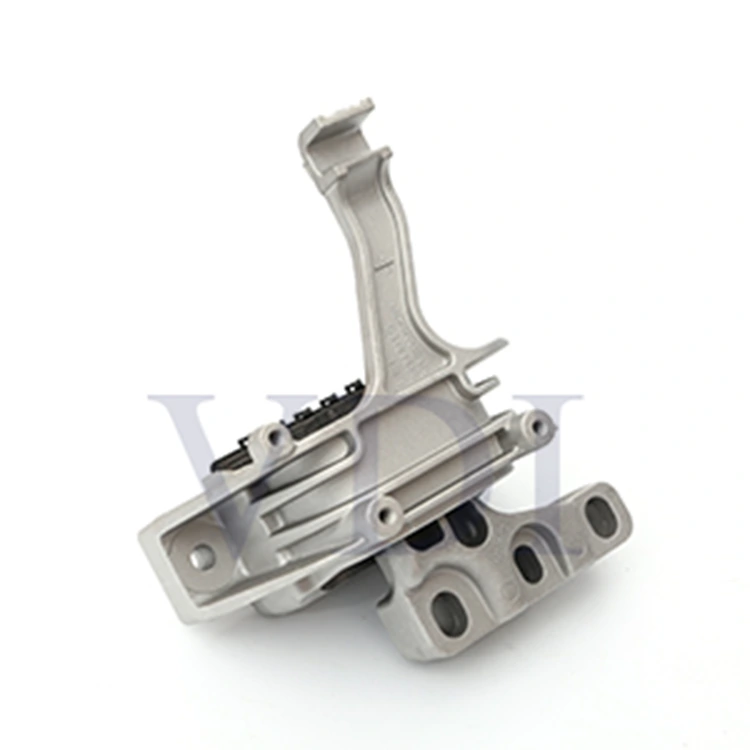
(For optimal performance, we recommend VDI products such as the Control Arm Bushing 4D0407181H, specifically engineered for these critical connection points.)

Friendly Reminder: Driving Tips to Protect Rubber Bushings
1. When approaching high-profile speed bumps, slow down and adopt a diagonal crossing technique—allow one wheel to bypass the bump while the other rolls over it—to minimize impact shock on the suspension.
2. Reduce speed to below 50 km/h when traversing consecutive speed humps, easing the load transmitted from the road to the chassis.
3. While driving, actively avoid manhole covers, potholes, and road debris whenever possible.
4. Avoid aggressive steering maneuvers that generate excessive lateral forces on control arms and suspension linkages.
5. Inspect chassis components regularly; upon detecting rubber cracking or delamination, we recommend replacing with VDI products such as the Control Arm Bushing 4D0407181H.
6. Perform routine tire rotation and wheel alignment to minimize abnormal forces acting on suspension geometry.