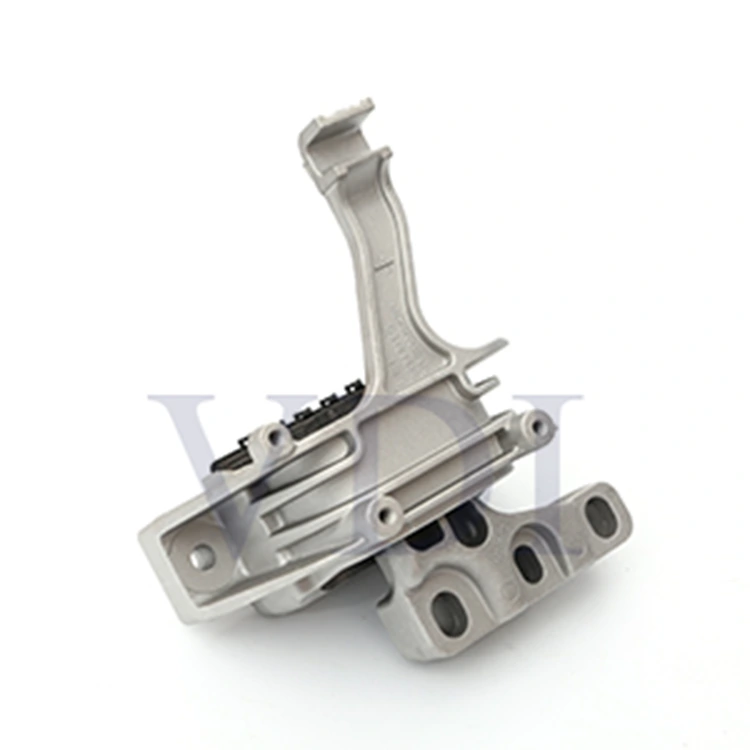

When your car’s undercarriage makes a “squeaking” or “creaking” noise, and the steering wheel pulls to one side during driving, the issue may well lie with the suspension bushings. Today, we’ll take a closer look at automotive bushings.
In mechanical design, connecting moving components is common—but direct metal-to-metal contact causes friction and wear. To address this, engineers use flexible “soft connections.” These reduce wear significantly and, when they eventually degrade, are far easier and cheaper to replace than the main structural parts. This principle gave rise to industrial bushings.
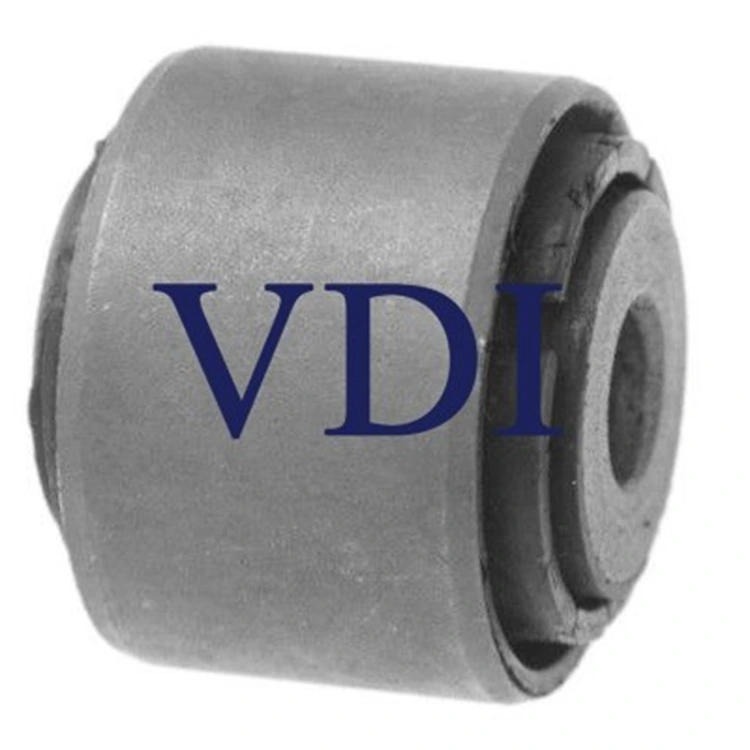
In vehicles, bushings are elastic components installed at the joints of the chassis—such as in control arms(e.g., Control Arm Bushing 1J0407182), sway bars, and subframes. They’re typically made from rubber, polyurethane, or a combination of these materials bonded to a metal sleeve. Their core function is to replace rigid connections, absorb relative motion between parts, and minimize friction-induced damage. In simple terms, they act as both “cushion pads” and “wear-resistant joints” for your car’s suspension.
Chassis bushings play a critical role in vehicle dynamics. They connect the frame to the suspension system, eliminating harsh metal-on-metal contact, protecting components, absorbing shocks, and ensuring ride stability and comfort. They must endure not only the vehicle’s static weight and dynamic loads but also the stresses of rough roads, cornering forces, and braking impacts.
High-quality bushings(such as the Control Arm Bushing 1J0407182) can significantly enhance driving performance by reducing tire wear, minimizing suspension fatigue, and improving overall handling feel.
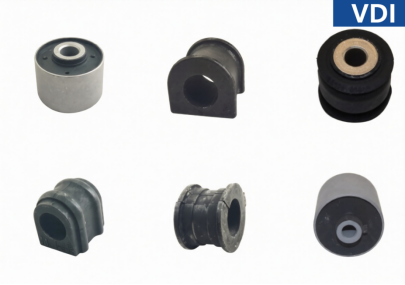
Bushings come in many types—classified by location (e.g., front/rear axle), component (e.g., control arm, tie rod, subframe), material (rubber, polyurethane, nylon, metal), design (open vs. closed), and damping method (hydraulic vs. solid). Despite these variations, their fundamental purpose remains consistent: to provide controlled flexibility where it’s needed most.
1. Selection of Press-Fit Sleeve Size
When removing or installing bushings, use a sleeve of the appropriate size to ensure that force is applied only to the outer metal shell of the bushing, without stressing other components. Always wear safety goggles and gloves during the procedure. The dimensional data provided in Keditec product manuals can help you select the correct sleeve size.
2. Press-In Force
To facilitate installation, deburr the inner bore thoroughly before pressing in the bushing, and apply a small amount of lubricant (e.g., grease 4240) to both the inner bore and the leading edge of the bushing’s outer diameter.
Pay close attention to the required press-in force:
For a bushing with a 40 mm outer diameter metal sleeve, the press-in force should generally exceed 6 kN.
For nylon-sleeve bushings, the required force is typically greater than 20 kN.
These values scale with the bushing’s outer diameter. If the measured press-in force is significantly higher or lower than expected, inspect the housing bore for damage or misalignment, and verify that the correct bushing part number has been selected.
3. Installation Orientation and Positioning
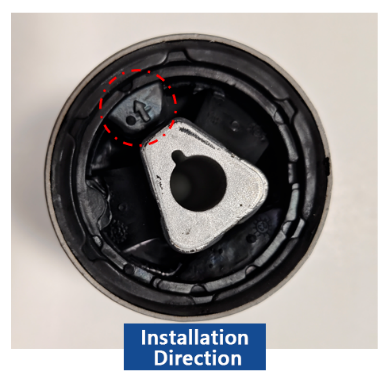
During installation, ensure the solid (non-split) section of the bushing is aligned with the horizontal forward direction of vehicle travel. If the bushing features an orientation arrow, this arrow must point forward in the direction of travel.
After pressing, confirm the bushing is centered in the mounting hole, with equal exposure length on both sides.
4. Installation Stress Relief
After installation while the vehicle is still lifted (with suspension unloaded), residual stress often builds up in the chassis system. To relieve this stress, lower the vehicle onto its wheels, straighten the steering wheel, then loosen and re-torque all mounting fasteners to the manufacturer’s specified torque values. This process allows the suspension bushings to settle into their natural, stress-free position, restoring the chassis to its intended alignment and geometry.
Once completed—especially when using precision-engineered parts like the Control Arm Bushing 1J0407182—your vehicle will feel like it’s laced up in a fresh pair of running shoes, ready to drive smoothly and confidently wherever you go.