
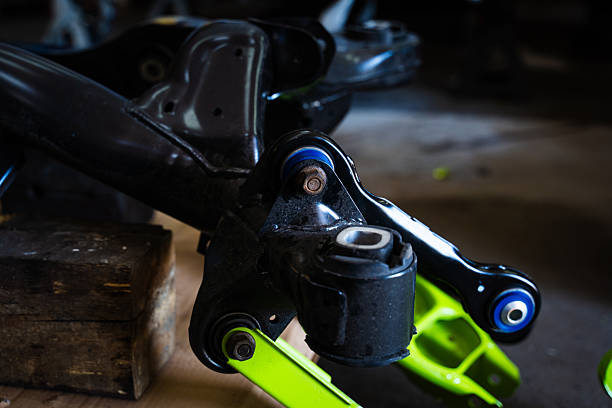
In modern automotive suspension systems, the control arm bushing is far more than a passive connector—it is a precision elastomeric component that directly influences vehicle dynamics, ride quality, and long-term safety. The selection of its base material is therefore not arbitrary, but driven by rigorous engineering trade-offs among chemical resistance, mechanical durability, thermal stability, and dynamic fatigue performance.
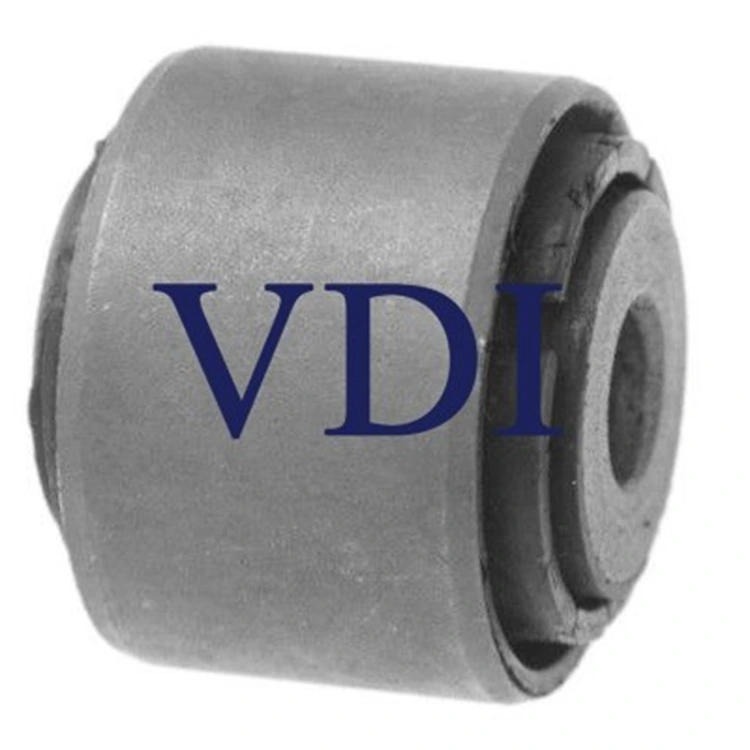
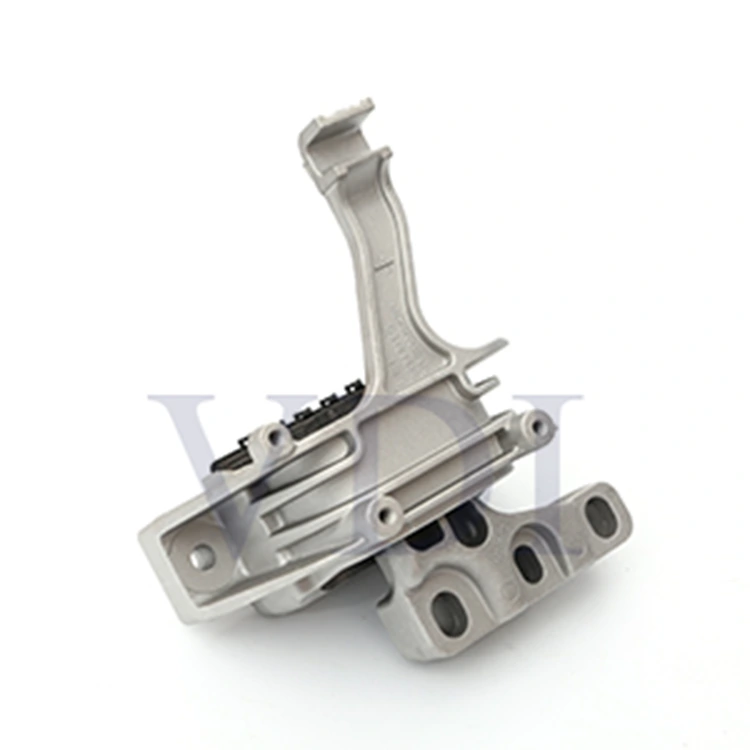
(VDI control arm bushing 8K0407182B are made with far more than just a piece of rubber molded to look like a part.)
Historically, natural rubber (NR) was the default choice due to its high resilience, low hysteresis, and excellent low-temperature flexibility. However, NR contains unsaturated carbon-carbon double bonds in its polymer backbone, making it highly susceptible to oxidative and ozonolytic degradation. In real-world conditions—particularly in urban environments with high ozone levels (0.05–0.1 ppm) or coastal regions with salt-laden air—NR bushings develop surface cracks within 12–24 months, leading to loss of preload, increased play, and degraded handling response.
On the other end of the spectrum, polyurethane (PU) offers superior tensile strength (up to 40 MPa vs. NR’s 20 MPa) and abrasion resistance, which made it popular in performance and off-road applications. Yet, PU exhibits high dynamic hysteresis, meaning it converts a significant portion of mechanical energy into heat during cyclic deformation. Under high-frequency excitations (e.g., 15–25 Hz from rough roads), internal temperatures can exceed 120°C, causing thermal aging, chain scission, and irreversible hardening. This not only increases noise transmission but also reduces damping effectiveness over time.
EPDM (Ethylene Propylene Diene Monomer) bridges this gap through its unique molecular structure. As a saturated-chain polymer (with only a small amount of diene for vulcanization), EPDM lacks vulnerable double bonds in its main chain. This grants it exceptional resistance to:
Ozone attack (passes 100 ppm, 40°C, 96h test per ASTM D1149 with no cracking)
UV radiation (minimal surface degradation after 2,000 hours QUV exposure)
Thermal aging (retains >80% of original properties after 1,000 hours at 150°C per ISO 188)
Critically, EPDM maintains a stable dynamic modulus (E’) and low loss tangent (tan δ) across a wide temperature and frequency range. This ensures consistent stiffness behavior under both cold-start conditions (-40°C) and hot-climate operation (+80°C ambient). Moreover, when compounded with optimized carbon black and plasticizers, EPDM formulations achieve fatigue lives exceeding 500,000 cycles at ±12 mm displacement (2 Hz)—a benchmark validated by OEM durability protocols such as VW PV 1200.
As a result, over 85% of OEM control arm bushings for mass-market passenger vehicles (including platforms from VW, Toyota, Ford, and Stellantis) now utilize EPDM-based compounds. This is not a cost-driven decision, but a performance-driven material optimization that balances longevity, NVH performance, and safety.
For aftermarket suppliers, replicating this performance requires more than just “using EPDM.” It demands precise control over polymer ethylene content (typically 50–60%), diene type (ENB preferred for faster cure), filler dispersion, and—most critically—the rubber-to-metal bonding process. Only then can a replacement bushing truly deliver the “OEM-level reliability” that modern drivers expect. Welcome to choose VDI control arm bushing 8K0407182B.