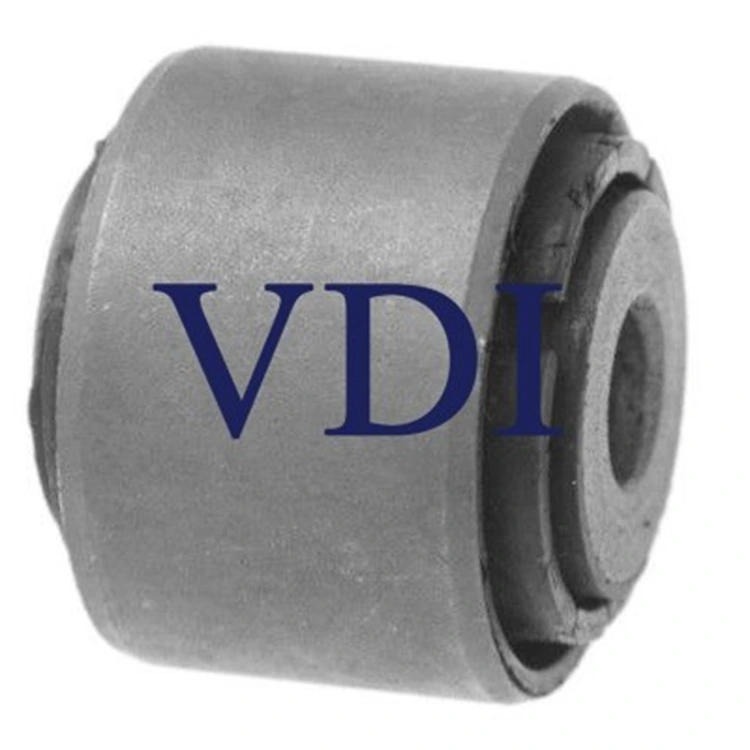

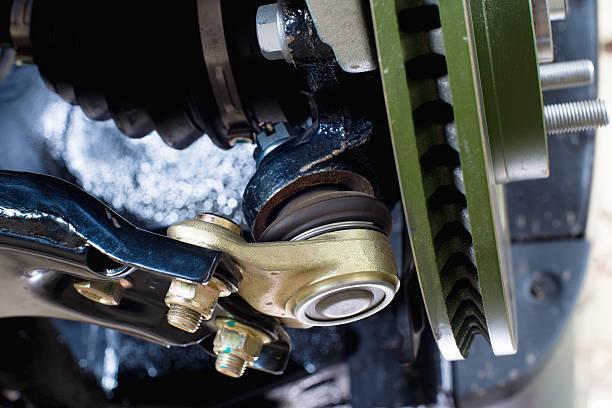
Subaru Forester owners—especially those with 2014–2018 models—frequently report premature tearing or deterioration of the front lower control arm bushings. These rubber components connect the control arm to the subframe, absorb road impacts, and maintain proper wheel alignment. When worn, drivers commonly experience clunking/squeaking noises, steering vibration, highway instability, or uneven tire wear.
Subaru even issued a Technical Service Bulletin (TSB 05-63-18R) specifically addressing the front (longitudinal). The bulletin states the original design was prone to bushing degradation, allowing the front edge of the control arm to shift inward/outward, altering toe alignment and causing noticeable steering shake. Subaru has since upgraded the bushing rubber compound—new parts are marked with a yellow paint stripe for easy identification. (Note: Low-quality aftermarket control arm bushing 4E0407181B often suffer similar failures.)
•Clunking or squeaking when turning slowly or driving over bumps
•Severe vibration or wobble at highway speeds—sometimes described as “worse than a speed bump”
•Loose or vague steering, especially during lane changes
•Excessive inner/outer tire wear due to alignment shift
Many owners report failure between 40,000–80,000 miles (64,000–128,000 km)—well below expected suspension life. Contributing factors may include AC condensation dripping onto the bushing (accelerating dry rot) or regular rough-road driving.
Most dealers and independent mechanics advise replacing the full lower control arm assembly instead of pressing in new bushings alone, because:
•Bushing replacement requires special tools and significant labor
•New arms come pre-assembled with fresh bushings + new ball joints
•Better value: Aftermarket or OEM arms often cost less than labor for bushing-only replacement
•Dealers quote $800–$2,000 for both sides (including alignment)
•DIYers buy parts (e.g., from RockAuto) for under $200 and replace them at home
•Enthusiasts upgrade to STI-spec aluminum arms (with spherical bearings instead of rubber) for greater durability and sharper handling—but expect increased road noise
•Some successfully requested goodwill assistance from Subaru of America, especially near the end of warranty
Important: Surface cracks are normal and not urgent—but deep tears, separation, or excessive play require immediate replacement. Ignoring severe wear compromises handling and safety.
The front (longitudinal) on 2014–2018 Foresters had a design flaw: the original rubber compound degraded prematurely, failing to secure the front edge of the control arm. This caused excessive movement, leading to vibration, noise, and alignment drift. Subaru’s fix? A more durable rubber formulation—now identifiable by the yellow stripe.
Additionally, the passenger-side bushing fails more often because the AC condensate drain hose drips water directly onto it, accelerating rubber dry rot—making right-side high-speed shake especially common.
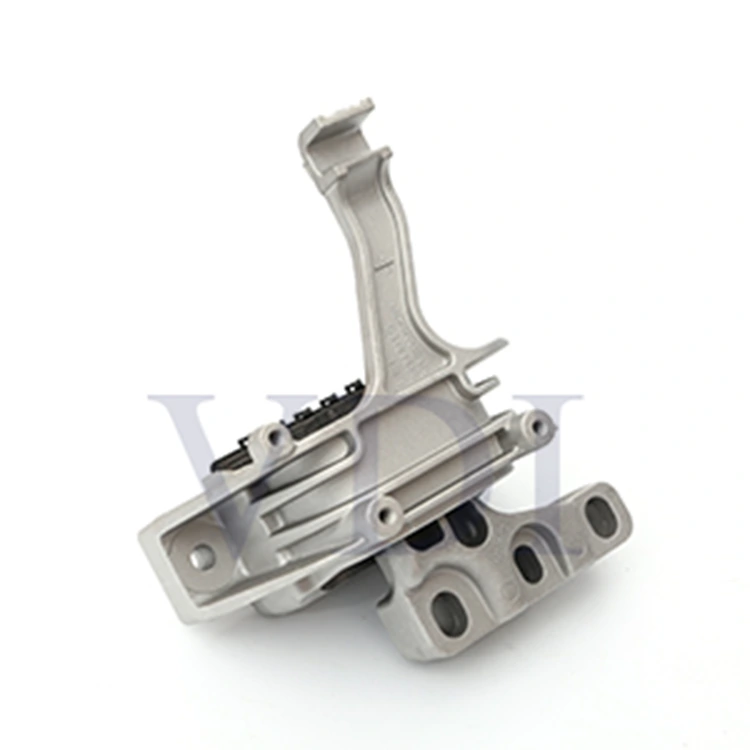
Choose VDI Control Arm Bushing 4E0407181B—engineered for durability, precision fit, and long-lasting performance.