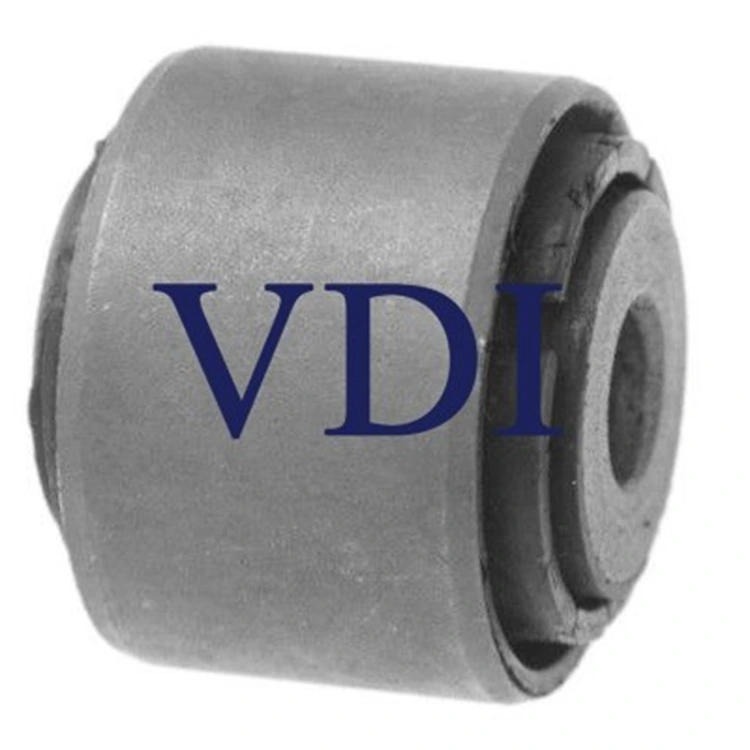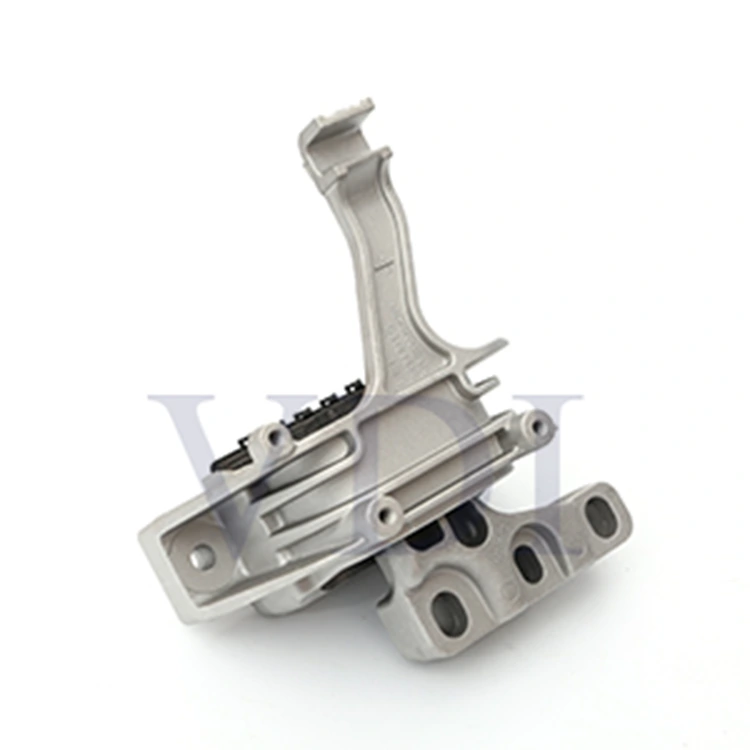

When you’re choosing a sway bar bushing, the material matters—not in theory, but in how long the part lasts, how it behaves under load, and how often you’ll have to replace it. For most factory cars, rubber has been the default. It’s soft, quiet, and good enough for paved roads. But in applications where the suspension is under constant stress—like tractors, off-road trucks, or heavy equipment—rubber often doesn’t cut it. That’s where polyurethane comes in.
This isn’t about “better” or “worse.” It’s about matching the material to the job.
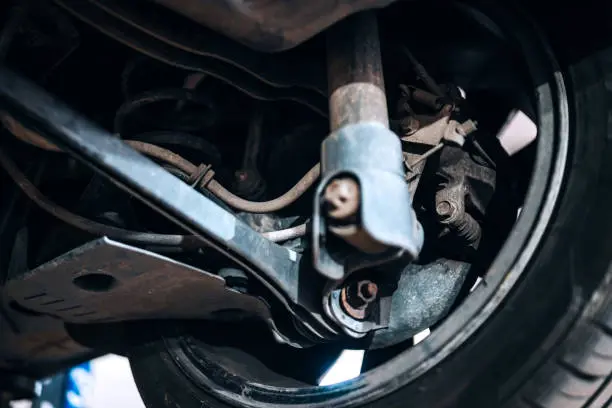
A sway bar bushing clamps the anti-roll bar to the frame or axle. It’s not a bearing—it doesn’t rotate freely. Instead, it holds the bar firmly while allowing just enough twist to let the suspension work. In agricultural or construction machinery, this isn’t about comfort; it’s about keeping the machine stable when turning at speed or on uneven ground. If the bushing wears out, the bar moves loosely in its mount, leading to poor control, uneven tire wear, or even unsafe handling.
It also acts as a buffer—so road shock doesn’t turn into metal-on-metal clatter. That’s why material choice affects both performance and noise.
Rubber bushings are standard on most passenger cars, and for good reason:
●They absorb high-frequency vibrations well, making rides smoother.
●They’re cheap to make and replace.
●They stay quiet over time—assuming they’re not exposed to oil, heat, or UV.
But they have real limits:
●They degrade. In hot climates or near oil leaks, rubber hardens, cracks, or swells.
●They wear quickly under constant flexing—like on a combine harvester that runs 12 hours a day over rough fields.
●They deform permanently. Once compressed too long under heavy loads, they don’t spring back. That creates play, and play means slop in the suspension.
In short: rubber works fine if the vehicle spends most of its life on smooth roads. But it’s not built for punishment.
Polyurethane isn’t new, but its use in sway bar bushings has grown because it solves rubber’s weak points:
●It resists oil, grease, ozone, and UV—so it doesn’t crack or swell like rubber.
●It wears slower, even under constant stress. On heavy equipment, that can mean 3–4 times the service life.
●It holds its shape. Even under heavy loads, it doesn’t take a “set,” so the sway bar stays properly aligned.
●Its hardness can be tuned. A bushing for a rally truck might be molded at 90A durometer for sharp response; one for a utility vehicle could be 75A to allow more give without sacrificing strength.
Yes, it’s stiffer than rubber—so it transmits more road feel. But that’s not a flaw in applications where precision matters more than plushness.
And contrary to old assumptions, modern polyurethane formulations don’t automatically squeak. Proper installation (clean surfaces, correct torque, no over-compression) eliminates most noise issues.
Take a tractor that operates daily in mud, dust, fertilizer, and temperature swings. A rubber bushing might last 18 months before cracking from chemical exposure or drying out. A polyurethane one—like the Sway Bar Bushing 97034379205—can easily go 5–6 years with no loss of function. That’s not just convenience; it’s reduced downtime and lower labor costs.
The same logic applies to off-road recovery vehicles, municipal snow plows, or mining support trucks—all operate in conditions where reliability trumps comfort.
A polyurethane bushing might cost 20–30% more than a rubber one. But if it lasts three times as long and prevents misalignment that damages other suspension parts, the total cost of ownership is often lower.
In fleet or commercial use, that math adds up fast.
●Passenger cars on normal roads? Stick with OEM-style rubber. It’s quiet, comfortable, and cost-effective for typical use.
●Anything used off-road, under load, or in harsh environments? Polyurethane is the practical choice. It’s not “performance hype”—it’s about keeping the machine running with fewer failures.
And when you need a part engineered for those conditions, something like the Sway Bar Bushing 97034379205—made to precise tolerances, tested for chemical resistance, and designed for long-term dimensional stability—delivers exactly what heavy-duty applications require: durability without guesswork.
In the end, the right bushing isn’t the softest or the hardest. It’s the one that lasts as long as the job demands.
When you need a component specifically engineered for demanding conditions, a product like the VDI Sway Bar Bushing 9703437920—manufactured to precise tolerances, tested for chemical resistance, and designed for long-term dimensional stability—is worthy of your trust.