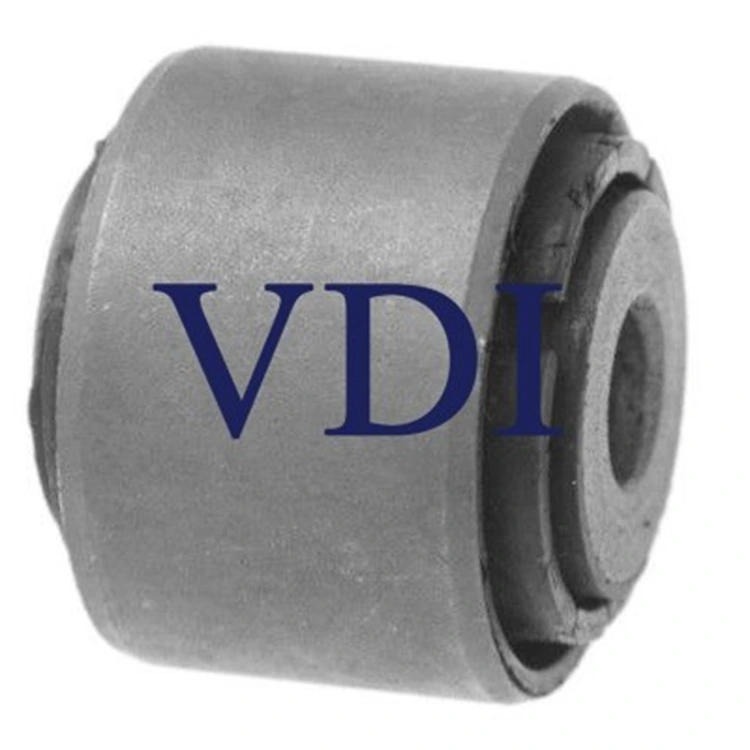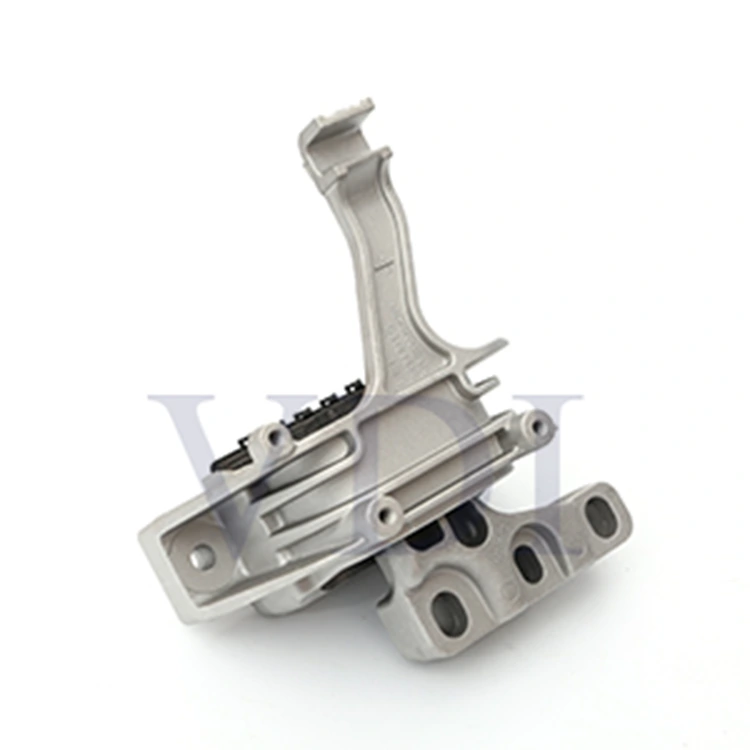

In September 2025, a real-world case from a Kia EV9 owner Facebook group sparked widespread attention: an EV9 with 282,000 miles (approx. 454,000 km) developed severe front suspension noise—persistent “clunk-clunk” sounds and noticeable vibration when driving over bumps or cornering. Diagnosis confirmed complete failure of the lower control arm bushings. Notably, during the repair, the owner replaced not only the control arm bushings but also the stabilizer links—highlighting a long-overlooked yet critical component: the Sway Bar Bushing.
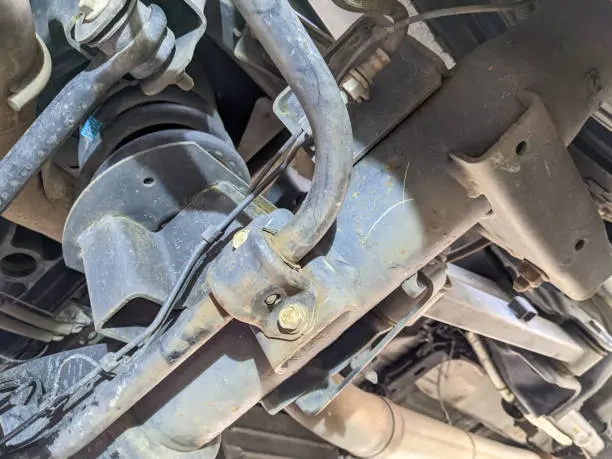
The Kia EV9, as a large all-electric SUV, has a curb weight exceeding 2,300 kg—significantly heavier than comparable gasoline vehicles. This “weight burden” places unprecedented stress on chassis rubber components:
●High-frequency load cycles: Instant EV torque, frequent stop-starts, and regenerative braking intensify dynamic suspension loads.
●Higher static load: The heavy battery pack keeps bushings under constant compression, accelerating rubber aging.
●Thermal challenges: Heat from the motor and power electronics may raise temperatures around the front subframe, indirectly shortening rubber lifespan.
The Sway Bar Bushing is the core flexible element connecting the sway bar to the subframe. Its job is to allow the sway bar to rotate freely during body roll while isolating metal-to-metal contact, noise, and impact. Once it fails due to aging, cracking, or permanent deformation, it directly causes:
●“Metal-on-metal clunking” or “knocking” noises during turns
●Sluggish steering response and reduced lateral support
●Accelerated wear on stabilizer links, potentially leading to ball joint deformation
This explains why the EV9 owner had to replace both control arm bushings and stabilizer links—the early failure of the Sway Bar Bushing had already caused irreversible damage to the links.
Recent real-world incidents show that bushing failure goes far beyond “just noise”:
●A 2017 Nissan Altima suffered front control arm bushing rupture, causing front axle instability at highway speeds—resulting in a guardrail crash.
●In 2014, the same model continued a 1,000-mile trip despite visibly cracked bushings—leading to loss of control during a low-speed turn.
●Multiple Reddit and repair forum cases reveal that loose bushings cause abnormal ball joint wear, triggering high-speed wheel shake, lane departure, and even multi-vehicle rear-end collisions.
These cases point to a critical but overlooked truth: suspension bushings (including control arm bushings and Sway Bar Bushings) fail silently. Unlike brake pads or tires, they offer no obvious wear indicators—yet they collapse without warning.
And electric vehicles—especially heavy-duty EV SUVs like the EV9—are magnifying this risk by several times.
1. Inspect regularly on high-mileage or heavy-load vehicles: Check front suspension bushings every 30,000 km or 2 years. Look for cracks, deformation, dried lubricant, or exposed metal on the Sway Bar Bushing.
2. Choose high-performance materials: OEM rubber bushings degrade quickly under heavy loads. Upgrade to high-density polyurethane—like the market-leading VDI Sway Bar Bushing 7L0411313H, known for superior wear resistance and anti-creep performance.
3. Replace as a system—not in isolation: If the Sway Bar Bushing fails, inspect stabilizer links, control arm bushings, and ball joints. These parts often suffer hidden overload once bushings degrade. Replacing only one component risks repeat failure.
4. Pay attention to installation details: Upgraded bushings often have tighter inner diameters. Ensure bracket compatibility (e.g., VW MK4’s 1J0-411-336-D bracket) and use silicone-based waterproof grease during assembly to prevent dry friction and premature wear.
The 454,000-km Kia EV9 case is both a testament to EV reliability—and a wake-up call about chassis rubber durability. While the industry races toward longer range and smarter tech, the material science and structural design of foundational chassis components ultimately determine whether a vehicle can truly “go the distance.”
The humble yet vital Sway Bar Bushing deserves greater attention from high-mileage fleet operators, service centers, and auto parts buyers—because its failure is rarely the end… it’s often the beginning of a chain reaction.
Upgrade your fleet with VDI Sway Bar Bushing 7L0411313H—engineered for extreme durability in today’s heavy electric vehicles.