
When most car owners hear “chassis parts,” they instantly think “expensive,” “complicated,” or “just keep driving until it breaks.” So when a mechanic says, “Your sway bar links (also called stabilizer links or end links) are shot,” tons of people push back: “The car still drives fine—why replace them?”
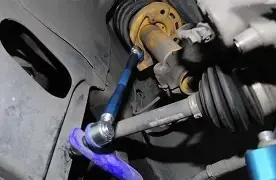
What Do Sway Bar Links Actually Do? The sway bar link connects the stabilizer bar (anti-roll bar) to the control arm or strut. Its job is simple but critical:
· Stops body roll when you corner hard
· Turns left-right suspension movement into torsion on the bar for better handling
· Keeps tires planted on the road by transferring lateral forces
Every speed bump, pothole, or corner? That little Stabilizer Link (and its twin on the other side) is working overtime under high-frequency alternating loads.
Do They Ever “Go Bad”? How? Yes — but they rarely snap in half. Failure is almost always gradual wear:
1. Ball joint wear / play – Most links use a ball-and-socket design (like a tiny hip joint) packed with grease and sealed by a rubber boot. Once the boot cracks, grease leaks out → metal-on-metal contact → play develops.
2. Rubber bushing cracking or hardening – Some designs use bushings instead of ball joints; heat, oil, and ozone kill them fast.
3. Rust and corrosion – Coastal areas, salted winter roads, or humid climates eat the steel rod alive.
Most searched symptoms on Reddit & Google (you’ve probably typed these):
· Clunking / knocking over speed bumps or potholes
· Loose, floaty steering feel or extra body roll
· Uneven tire wear or pulling even after an alignment
Do You Need to Replace Them “Every 40,000 Miles” Like Some Shops Claim? Here’s the Data Short answer: No — it’s condition-based, not mileage-based.
· VW, Audi, GM, and most European OEM service manuals list sway bar links under “Inspect per condition,” not scheduled replacement.
· TÜV Germany 2022 chassis study (8+ year old cars, 150,000+ km): 68% showed measurable ball joint play (>1.0 mm), but only 32% actually affected handling enough to fail inspection.
· SAE J400 lab durability tests: OE-quality links (including popular Stabilizer Link 4F0505465Q) usually stay under 0.5 mm wear after 100,000 miles of mixed driving. Cheap $15 Amazon specials often exceed the 1.0 mm safety limit by 50,000 miles.
Bottom line: Lifespan depends way more on material quality and road conditions than the odometer.
When You Should Actually Replace Your Sway Bar Links Get them checked (or just replace) if:
· You regularly drive terrible roads, gravel, or salted winter highways
· Car is 6+ years old or over 120,000 km (75,000 miles)
· You hear the classic clunk or feel loose handling
· You’re already doing struts, control arms, or an alignment — bad links will ruin the new parts’ performance and the whole Stabilizer Bar Assembly won’t work right
Final Takeaway :Stabilizer Link and the rest of the Stabilizer Bar Assembly are tiny, cheap parts that massively affect safety and handling. They don’t need to be on a “regular replacement” schedule — but ignoring obvious wear is asking for clunks, bad tire wear, and a sketchy-feeling car. Inspect by condition, replace when bad, and you’ll save money while keeping your suspension tight for years. Welcome to purchase VDI Stabilizer Link 4F0505465Q.