
The outer tie rod ends are a critical component of the steering system, linking the steering rack to the wheel knuckle. They enable smooth suspension travel while maintaining precise wheel alignment based on your steering input. These parts are vital for vehicle safety; significant wear or damage can severely impact steering response and handling. If a tie rod end fails completely, you risk total loss of steering control. Due to constant movement and road stress, they inevitably degrade over time. Common symptoms of bad tie rod ends include clunking noises over bumps, loose or vague steering feel, and uneven tire wear. If a diagnostic check confirms a worn tie rod end, you can perform this DIY repair at home. Consult your vehicle’s service manual for the specific replacement procedure and correct torque specs.
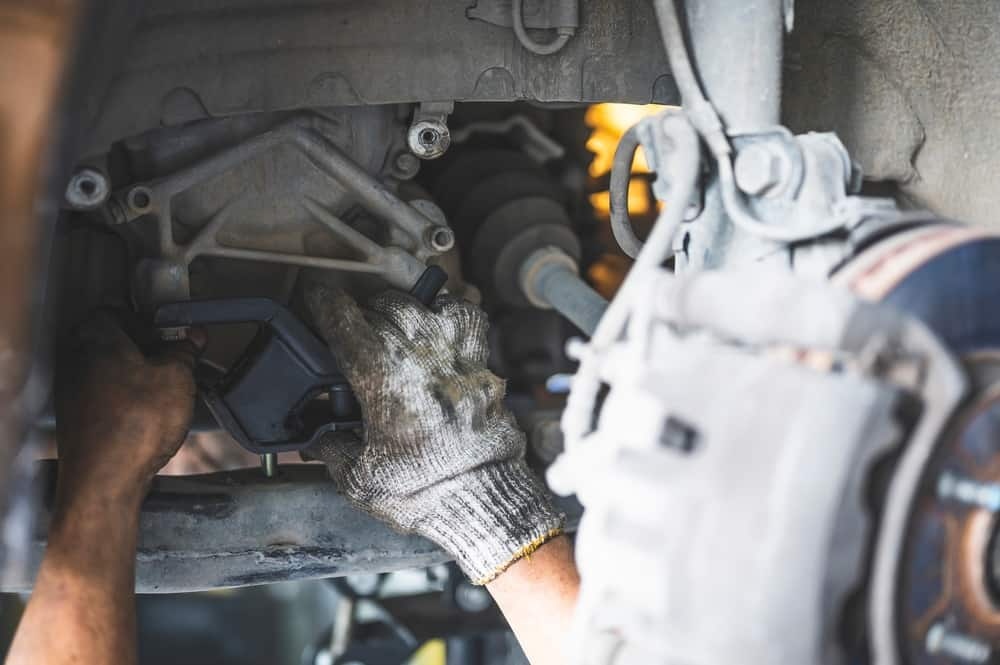
The task of replacing a tie rod end isn’t overly difficult, but it requires a few common tools as well as a specialty tool or two. You should have:
A deadblow hammer
Tie rod separator
Assortment of wrenches
Penetrating oil
Propane torch
Grease gun
Gloves and goggles
A Mag-Torch will be a great help if the jam nut is seized to the tie rod. A key piece of equipment is the tie rod separator as the stud is likely going to be stuck in the knuckle.
1.SAFETY FIRST
Park your vehicle on a flat, dry surface and install wheel chocks. Wear appropriate gloves and safety goggles. Lift the car, place it on jack stands and remove the wheels for easy access.
2.LOCATE THE OUTER TIE ROD END
Locate the outer tie rod end. The ball with stud and locking nut attaches to the steering knuckle (spindle) next to the tire. If you have penetrating oil, it’s a good practice to spray the jam nut and threads, along with the top castle nut with penetrating oil, as these are often very corroded. The outer tie rod will be connected on one side to the steering knuckle with either a locknut or a castle nut and a cotter pin which keeps it from loosening.
The other side of the tie rod is threaded, and connects to either an inner tie rod (on rack and pinion systems) or a center link, drag link, or adjusting sleeve, which any of these reside in more traditional steering systems, and some trucks still today.
3.REMOVE THE TIE ROD’S STUD NUT AND SEPARATE
As stated before, the tie rod connects to the steering knuckle of the car on each side with a tapered stud and nut. For a castle nut, remove the cotter pin. Many times, these can be corroded and a pain to remove. Make sure to flood the nut down with penetrating oil. Next, remove the nut.
4.SEPARATE THE TIE ROD FROM THE KNUCKLE
You will now need a tie rod separator, otherwise known as a “pickle-fork” to dislodge the tapered stud from its bore. You will insert the fork between the tie rod and knuckle, and hammer until the tie rod drops and separates. Sometimes, this process can take time, as many tie rods are very stubborn.
5.LOOSEN THE JAM NUT (R&P TYPE) OR ADJUST SLEEVE NUT (CENTER LINK TYPE)
One nice part with rack and pinion outer tie rods is that they often can be removed from the car without upsetting the alignment specs. The outer tie rod end threads onto the inner tie rod end and is held securely in place with a jam nut. Ensure the threads behind the nut are clean.
Using a holding tool in one hand, secure the inner and outer tie rod ends while loosening the jam nut with a wrench in the other hand. Do not allow the ‘loosening pressure’ to put excessive pressure on the rack and pinion’s inner tie rod. This may harm the gear or seal. Keep in mind, jam nuts will often loosen with either left or right hand threads, so sometimes turning the nut to the right will loosen it. Back the nut away and mark the position of the outer tie rod end with a small amount of paint. This will identify how far to thread the new tie rod end onto the inner tie rod. Now, you can unthread the tie rod end.
Note: The jam nut may be seized from never being removed previously, and from being exposed to the elements. Heat the nut with a propane torch for several minutes to help break up the rust inside, then liberally spray it with penetrating fluid. While it’s still hot, attempt to loosen the jam nut.
Many times, you’ll need a pair of locking pliers or wrench to turn the tie rod out. Once out, compare the lengths of your new tie rod to the old, and the mark you made showing exactly where the jam nut was threaded. You can then transfer this mark or location over to the new tie rod and check measurements from the mark to the center line of the tapered stud to be sure both marks are exactly the same.
6.LOOSEN THE ADJUSTER SLEEVE NUT (CENTER LINK TYPE)
For center link-tyle applications, the outer tie rod end screws into the tie rod adjusting sleeve. Loosen the adjusting sleeve locking clamp and nut that holds the outer tie rod end. Do not loosen the inner tie rod locking nut. You will likely need to apply penetrant to the adjusting sleeve and outer tie rod end threads. Allow to soak while performing the next steps.
Mark the tie rod end position with a small amount of paint. This will identify how far to thread the new tie rod end into the adjusting sleeve. Keep in mind that many tie rods have either left-hand or right hand threads, meaning you may be turning the tie rod to the right to loosen it.
7.INSTALL THE NEW TIE ROD END
Thread the new tie rod end onto the inner tie rod end or into the tie rod adjusting sleeve. Position as close as possible to the original tie rod’s position. With the new rubber grease boot in place on the tie rod end, insert the threaded ball stud into the steering knuckle mounting hole. Install the locking nut and new cotter pin.
Be sure and tighten the to the proper manufactures specification torque. This is important! If the nut loosens or the threads are damaged due to overtightening, the tie rod end could separate and cause an accident! So, be careful.
Note: Some new tie rod ends use self-locking nuts that do not incorporate a cotter pin. Either design will work.
8.TIGHTEN THE JAM NUT
Now, firmly tighten the jam nut or adjusting sleeve nut. Use both tools on the jam nut style just like beforehand to avoid damaging the rack and pinion. If equipped, install the grease fitting. Use a grease lube gun and fill the new tie rod end with chassis lubricant. Do not over do it! Now is a good time to check and lubricate the other suspension and steering components.
9.INSTALL WHEEL AND LUG NUTS
Install wheel and wheel nuts. Torque wheel nuts to owner manual specifications. Then, remove the tire jacks. Now is a good time to check the tire pressures.
Don’t forget to re-torque your wheels after driving 100 miles.
10.CHECK YOUR STEERING
Check the steering for smooth operation. The steering wheel should turn normally with no binding or catching. The steering wheel may be off-center due to the wheel alignment changes after the part installation.
11.GET AN ALIGNMENT
As mentioned before, some tie rod changes can get you close enough to original location that an alignment isn’t needed, but often it is, and regardless, it’s always recommended. Normally, over time your vehicle’s alignment will be out of spec anyways and should be tended to.
To seek alignment help, or help with a tie rod change, check out our list of Preferred Shops in your area, and look closely for ones who specialize in alignment work as many shops do not do alignments.
After your tie rod end has been installed, double check all of your fasteners again. Re-torque them as settling the vehicle’s weight on the suspension can cause slight movements if the part wasn’t perfectly seated before.
Turn your steering wheel side-to-side. You shouldn’t hear knocking noises or feel ‘slop’ before there’s steering response. If there is, find out why before taking your test drive.
Before taking any lengthy drives, take a short test drive to determine if your steering wheel is off-center or there’s a pull, indicating an alignment is necessary.
Outer tie rod ends are critical to your vehicle's steering and handling. If you notice any warning signs, have a professional technician inspect your vehicle. You are welcome to procure VDI Transmission Mount 6RF199555E.